Leave the office. Get in the elevator. Hold your breath as you feel your stomach lurch into your throat. Make a dash for the exit. In the car, wait for the traffic to move. Collapse on the sofa with a glass of wine. Try to let your mind go blank. It’ll be okay. Your therapist said things are getting better. The anxiety attacks, the mad runs to the toilet every few hours to throw up, they are beginning to subside. You are getting better. You are getting better.
Each day stretches into the next without much distinction. What few hours of sleep you do manage are plagued by scenes of faceless men drowning in a darkness that persists into wakefulness. Todd will be coming round soon. You tried to distance yourself, the unread messages stacking up on your hardly-used phone, but still he turns up each week: husband from a life you’ve left behind, now returning with guilt and flowers. It’s not him, you think. It’s the hayfever. It’s the stress of work.
You haven’t broken up. Not technically. You just can’t seem to remember where he fits within the chaos that your life has become. He moved out a week after your brother died. Wanted to give you space, as he put it, and the gap has simply never been closed. Now he is here again, unable to stay away when the only thing you need is time alone, and you have to remind yourself how to smile.
You take the flowers and, when he’s not looking, dump them in the trash. The smell of wilted roses masked by rotting fruit. He asks how things are going, and you say they’re getting better. The hallucinations have stopped, and you are beginning to picture your brother in a better light. Before the bridge. Before the water took his body.
”That’s good,” Todd says. You want to punch him. You want to grab him and tell him everything you’re feeling, and then you want him to fuck you just like he’s talked about fucking countless other women. You remember how alive they had sounded in his stories. The women back at uni with blond hair and big tits and a solid grasp of reality, abandoning themselves to the moment. How far removed they seem from your own attempts at a subdued life.
Could that really have been you? The makeup and expensive dinners. The countless dates while Todd pleaded for your attention. Those years existed, of course, hidden somewhere amongst the naivety of blossoming romance, but now they hardly seem real. As if you’re remembering a fiction of a life, played out on a theatre screen to an empty room.
You sit there listening to him talk, or rather not listening but imagining the two of you upstairs in the bed you’ve hardly used. ”I have tickets to a play,” he says, and you’re not paying attention, so you nod. ”It’s a date.” He seems happier after that. As if this alone is proof of your recovery. He tells you about a piece he’s working on—a new take on Cheval—and for once you can understand. It’s getting dark now, but he doesn’t make any move to leave. It’s okay. You weren’t planning on sleeping anyway.
Two days pass in a whirlwind of toilet stalls and terror. You long for the day you can find the mundanity in it all. The day when the world comes crashing down around you, and instead of filling you with blackness, it takes you with it, and you look back with every ounce of clarity that has been taken from you.
When it’s time to meet Todd, you think about backing out. But he’ll only come and find you. ”It’s for your own good,” he’ll say, and you won’t have the heart to say no, won’t have the guts.
You wish he would stop trying to help. He believes he can control everything around him. Every problem he sees, including you, is something to be fixed. How blissful it would be to live in such ignorance.
It’s cold out, and you find him smoking at the back of the queue.
”You look nice,” he says, and although you know it’s not true, you manage to smile awkwardly.
”I thought of you as soon as I saw the advert,” he says, ”it’s about a girl who grows up on a remote island. When she comes to the mainland, she has a breakdown and has to be sectioned.”
Is he joking? He must be joking. You were just telling him how much better you’re doing. Why would he put that in jeopardy now? But you don’t have the nerve to leave and so you slowly inch along until you’re sitting in the theater and the play’s about to start.
He was right, of course. You could see yourself in the girl on stage. You could see yourself in the tired way she moved, and the heavy bags under her eyes. You could see yourself in the countless times she had been through the same performance, repeated ad nauseam until everything lost its meaning. You are comforted in this way. Knowing that there are other people out there, forced into the same endless cycles, all trying to appear sane.
You try to tell him this, to thank him for bringing you, but he doesn’t understand. He thinks you’re disparaging the play.
”I knew it was a mistake,” he says. ”I should never have brought you.”
There is no point arguing, so you keep quiet, and then the two of you are back at your flat. He’s put a record on, and you’re drinking another bottle of Bordeaux. The sound and taste of all the sophistication that has lost its appeal. You try to remember a time long ago, when he was still young and the madness had not yet set in. It’s like trying to climb a pole submerged in tar. Unfamiliar faces appear, teasing you with memories that are not, and perhaps never were your own.
You’re in the bedroom now. The sheets crack with starch as he climbs in after you. You no longer want him as you did the other night. Passion and lust are now concepts made vague by a much deeper desire that has arisen within you. Peace.
Despite this, you do not protest as he climbs on top of you. In the darkness a world of possibilities calls out, unheard over the groans of something like passion.
Afterwards, he rolls over and falls into a deep sleep. It’s late, but you’re wide awake. You think about the girl in the play, and the hundred more times she will have to give the same performance. You think of the audiences that will fail to see how tired she has become. No one is coming to save the girl. Tomorrow will come and you will leave for work. The girl will walk out on stage and you will run for the bathroom. Your time will never come, and nothing will ever change. And nothing should ever change.


Rory Perkins is a British writer focusing on shorter works about the human experience. Currently working in the energy industry, he writes whenever he can find the time, and hopes one day to publish a collection of flash fiction.
Header photograph by Jen Ippensen
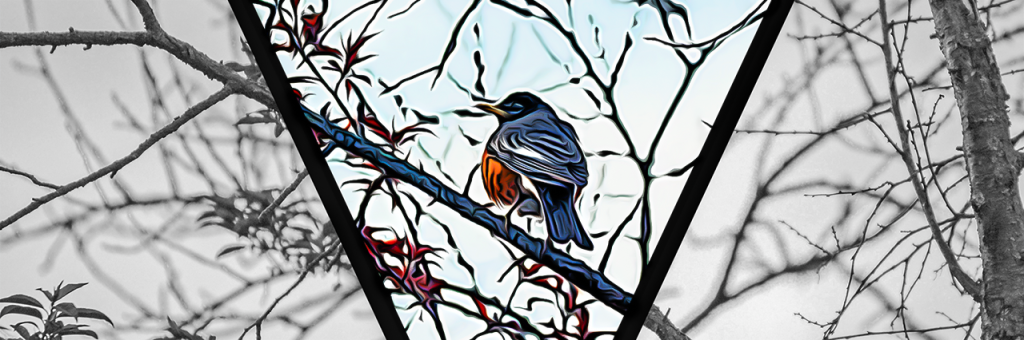
Header artwork by Jordan Keller-Wilson
Discover more from Vast
Subscribe to get the latest posts sent to your email.
 Vast
Vast 