S>E>X>S>C>E>N>E

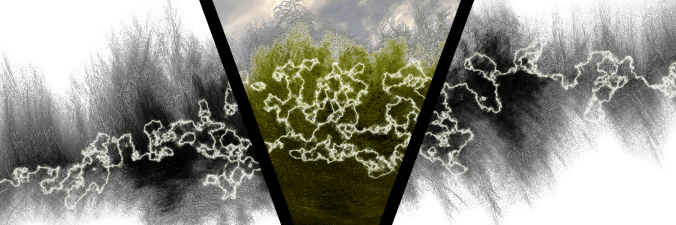
A black and white vegetative landscape overlaid with abstract lightning. The image is bisected by the signature Vast "V." Within the "V," vivid greenery shines shines through under a stormy, gray sky.

Though they smelled like flowers and looked like flowers and the teachers in health class described how they would open up like flowers if they fell in love and were treated very nicely, I simply could not justify asking any girl in my class to the Junior Prom, which must have been devastating for them, since I was funny, and I was talented, and I had washboard abs and shimmering long dark hair plus could do cool tricks with cigarettes and was the exact type of kid everybody would expect to have a date to the prom, even be the king of the prom, but money was tight ever since eighth grade, when my dad got arrested for being a meth dealer (which wasn’t fair, because “meth dealer” is just as good of a job as any other job—in fact, meth dealers stimulate the economy) so in the end I decided it would be best for everyone if I just skipped the whole dance thing and spent the night getting high by myself in my basement instead.

I explained all of this to my best friend, Hollis, after school. I figured, if anybody understood what I was talking about, it would be Hollis—my main man, my right hand, the one who shotgunned beers and threw rocks at cats with me every day in the student parking lot. But, as soon as I finished talking, he rolled his eyes.

“Ronnie,” he said, “I want you to look at me when I tell you this. None of what you just said is true, and the fact that you believe it is disturbing. Nobody in their right mind would ever want to go with you to the dance because you smell like shit and your body’s shaped like a deflated football, plus everyone in school already knows that your father is not only a meth dealer, but a rapist and a thief, too. We’ve all seen it on the news. So don’t ever mention this prom king crap to me again because seriously, Ronnie, I have to deal with enough of everyone’s shit all day without you shoveling more onto the pile.”

Sometimes, I wondered if Hollis thought he was doing a good job at hiding his gayness, or if it was as obvious to him as it was to the rest of us. It wasn’t just the histrionic lectures; it was the blonde perm, the wispy arm hair, the way he trotted over sidewalk-puddles like a fancy horse to keep his sneakers dry instead of just walking through them. For a while, there was even a rumor going around that he wore mascara, which turned out to be untrue, but, really, it’s not hard to see how it got started. 

In middle school, my friends and I used to take him out to the playground and give him swirlies and wet willies and Indian rug burns until he was shrieking like the little bitch he was. But by junior year, Hollis and I had become a lot closer—not because I felt bad or had a change of heart or anything, but mostly because freshman year we had both tried out for the wrestling team.

It was obvious from the jump that Hollis wouldn’t make the cut. Every day, in the locker room, he would rip his shirt off and blind us all with his smooth, hairless chest which shone with the brilliance of one thousand suns, even when our only job was wiping down the mats.

“My body is like a fine sculpture,” he said. “It deserves to be admired.”

We all wanted badly to pound him, but over summer break his dad had somehow come into a windfall of cash from some shady business dealings in Canada, so he was now loaded and, thus, unbullyable.

Once, at practice, the two of us were assigned to spar. Instantly, I was worried for Hollis, poor shrimpy scarecrow Hollis who could barely complete a pushup, who broke a sweat carrying the water cooler from the locker room to the gym. But when we actually took to the mat, I quickly discovered the freakish power that was stored within his skinny little elbows. Before I knew it, I was pinned. 

Before the count of three, he hissed, “Hit me,” his breath a hot fog on my face.

“What?”

“Hit me, asshole!”

And he loosened his grip just enough for me to wind up and sock him in the face, like I’d wanted to do all along. The little shit flew off me and a huge cheer erupted from the crowd. As my teammates swarmed me, Hollis laid flat on his back, staring up at the fluorescent lights, jaw beginning to purple.

“Are you in love with me, or something?” I asked him after practice. He was texting, pretending not to listen. “Why’d you let me win?”

“I don’t care much for wrestling. My dad says it’s a sport for losers and homosexuals. The only reason I’m trying out is because I need a way to kill time until the driver picks me up at five.”

“Oh.” I thought for a minute. “Well, I’m trying out because my dad says I have to make the team or else he’ll light up a whole pack of cigarettes and put them out on my arms.”

I stepped back, hoping to see how much I’d rattled him, but Hollis didn’t even look up from his phone. “I’m glad I let you win, then.” He sniffed. “Those scars would make you look like a drug addict.”

In the end, neither of us wound up making the team, but it was okay, because the whole experience had set in motion something entirely more vital and precious: a brotherly bond so strong that it would not be broken, not even shaken, until the end of junior year, when Hollis discovered the truth about what had happened with his prom date.

Hollis took his prom date very seriously. Every day that March, as green things sprang up from the gutters, Hollis and I would discuss who he was going to ask to the dance, and when, and how. Somewhere along the line, his sissy bitchiness had solidified into an insatiable lust for women—and the incredible thing was, the women lusted back. That spring, he was deciding between Ashley Brown, a field hockey player, Maddie Matlock, a brainy sadist who could dissect a fetal pig in five minutes, and Chrissy Santoro, the hottest girl in school, to be the one to finally take his virginity. Chrissy seemed like the most promising option, since she had, in Hollis’s words, “a mind-blowing, heart-stopping, knock-em-dead body and would fuck whatever crossed her path.”

Chrissy wasn’t coy about it, either. She bragged constantly about how she could make any guy, even grown-up guys, even teachers, do just about anything she wanted. In the sixth grade, she was famous for trading hand jobs for Abercrombie & Fitch and Pinkberry gift cards, which didn’t even make sense, because her dad was a plastic surgeon and could have bought her anything she wanted at the mall. Her mom was super hot, too, a model who used to be her dad’s patient. She was trying to make Chrissy into a model, just like her. Every Thursday, she would pick Chrissy up early to get her picture taken at the mall. I saw Chrissy in a newspaper ad for Discount Shoe Warehouse, once. She was standing in a field of flowers, all smiley and blonde and innocent. This could be you! 35% Off Sneakers!

Hollis and I were fascinated. The two of us had a game: whenever we saw a piece of garbage in the street, we’d pick it up and chase each other around with it, crying “Would Chrissy fuck it? Would Chrissy fuck it?” Then, when we got bored, Hollis would smoke and describe the filthy, depraved things he would do to Chrissy’s body if he ever got his hands on it.

“I’d ravage that shit like the last piece of fruit in an off-season orchard. Like a fuckin’ vagabond. Like a wild animal.”

I thought Hollis was the greatest poet I knew; I thought his words deserved to be preserved in art galleries and history books to be studied by future generations. Somehow, everything he did seemed to exude “cool”: He was allowed to stay out as late as he wanted and his parents didn’t care. His father let him smoke cigarettes and even cigars. Once, he broke into his mom’s liquor cabinet and drank an entire bottle of wine, and it wasn’t even his mom who found him on the living room floor in the morning; it was his dad’s secretary.

With all this in mind, it was no surprise he already knew exactly what he wanted to do after graduation, too. 

“I wanna start my own detective agency and crack open a bunch of cold cases,” he said. “Y’know, solving mysteries, and stuff.”

“That’s stupid.” I sniffed. “Are there even any mysteries left to solve?”

“Back in the 70s, this couple in Houston were boning in their car when some lunatic killed them and scattered a bunch of cut-up golf balls around their bodies. To this day, nobody knows why. That’s just one example. There’s probably a million cases like that in the past five years alone.”

I paused. “Y’know, that actually sounds pretty cool.”

“I know it’s cool. I don’t need you to tell me.”

And at that moment, I hated him more than anything, because I knew he really didn’t need me to.


Two weeks before the dance, Hollis was invited to a party at Chrissy’s house.

“You should come, Ronnie,” he told me that day in the parking lot. “This could be your chance to finally land a date.”

I turned him down, because one—I didn’t need to land a date; two—I didn’t want to go to some party with a bunch of lame jerkoffs I barely knew; and three—I had church the next morning, and my mom got really pissed when I “didn’t make God my number one priority.” Growing up, if I so much as whistled or kicked the back of a pew during church, she would drag me out to the parking lot and shout loud enough for everyone to hear: “Do you want God to keep your father in jail forever? Is that what you want, Ronnie? Huh? Is it? Huh? Huh???” But in fact, the day my dad was first taken away in a cop car, it was my mom who had taken the Lord’s name in vain by shouting “Jesus Christ! Jesus Christ! You bastard d-bags!” at the city’s finest, so if there was anybody God was punishing, it was probably her, though I never said anything like that out loud; in fact, I barely even thought it in my head, because I knew if she ever caught wind, I would never hear the end of it.

But when the day of the party actually arrived, and the TV stopped working, and we ran out of beer, and my mom threw her ashtray on the floor and started crying, I decided that maybe the party didn’t sound like such a bad idea after all. I took the bus all the way out to the edge of town, watching the houses grow increasingly more expensive outside the window. When I arrived at Chrissy’s parents’ plastic surgery mansion, kids were already dumping cans of beer into the swimming pool and stabbing the trampoline with jimmy knives.

“Where’s Hollis?” I asked the first person I saw.

“Isn’t that the kid who wears mascara?” he said, and I snapped back “No, that isn’t true, and it doesn’t even make sense; if Hollis wore mascara, his eyelashes would be black, but Hollis has blonde eyelashes, and you would know that if you even looked at him for half of one second, jerkoff.”

Another person chimed in, “I think I saw Hollis talking to Chrissy earlier.”

“Chrissy? What was he talking to Chrissy about?”

They paused, then started to snicker, and in that moment I realized that I really really really needed a beer. So I went into the kitchen and grabbed one from the cooler, but you’d have to be a maniac to stop at just one beer, so I grabbed another, and then after that I decided to go back for a seltzer, plus a whiskey lemonade and a couple shots to top it off, and then, all of a sudden, out of nowhere, I was the blinding, radiant, unstoppable, never-gonna-burn-out star of this party. I climbed onto the roof and did a jackknife into the beer-pool and all the onlookers got so excited they started dancing, and I got out and joined in too, and apparently our dance moves were so inspiring that pretty soon the whole entire party was dancing, including Chrissy Santoro herself, who was dressed sort of like a street walker.

She leaned in so close to me I could smell the puke on her breath: “I like your dancing!”

“Thanks!” I shouted back. “Where’s Hollis?”

“What?”

“Hollis? Hollis Donaldson?”

“Oh. Who cares?”

“Weren’t you with him?”

“You seem more fun.” She paused. “Do you wanna see my pictures?”

“Uhm…”

“I got about a thousand pictures inside. All models have to have lots of pictures of themselves. Want me to show them to you?”

“Not really.”

“But they’re really good. I promise.” Her voice took on a frantic, almost desperate tone. “They’re just right upstairs in my room.”

“No one gives a shit about your pictures, Chrissy.”

Chrissy made a face. For a moment, she almost looked hurt.

Then, suddenly, she sprang forward like a crazed animal trying to bite off my nose, except instead of my nose she landed on my lips and started trying to stick her tongue in my mouth.

“What are you doing!” I said, shoving her off. Chrissy blinked at me. The bitch had the nerve to stand there and blink at me, like I was the crazy one.

“You don’t like me?” she said. “You don’t think I’m pretty?” In the watery pool-light, I saw a trail of snot gleaming a line down from her left nostril.

This is the chick that Hollis thinks is hot? I thought. This drugged-out slut-bag?

“Fuck you, Ronnie,” she said, as if she could read my mind. Though she slunk away, the rest of the night passed in a funk. I really did try to get back into the spirit of the party—dancing with other chicks, doing a keg stand—but that bitch’s skankiness had successfully managed to kill the mood.

Sometime toward the end of the night, some kid wanted to flip Mr. Santoro’s car over: “Who wants to tip the Benz???” he cried, and a mass of people rushed towards the driveway. I had to sit down because I thought I was going to be sick. My eyes pounded and my whole body trembled all over. I needed to find Hollis. That was what I was there for. How had this whole night gotten so off track?

I stumbled across the driveway: “Have you seen Hollis?” I asked. “Hollis Donaldson?” Everyone was too busy rocking the Benz to hear me. It tipped precariously, windshield trembling with every impact of the tires on the asphalt. Every tip, I thought, Surely it can’t go any further. Surely this is the one where it actually falls. But somehow, it never did.

“Hey, Ronnie!” one of the kids finally shouted, pointing to the back of the house. “I think I saw your boyfriend heading over there!”

Pitching towards the backyard, I wondered what horrible circumstances had led to Hollis ending up all alone at the end of the party. Maybe Chrissy had broken his heart. Maybe he was just overwhelmed, like I was. I imagined his tiny, skinny body hunched over in the dirt, slick with saliva and sweat, shaking beneath my touch. I quickened, scanning the bushes as I rounded the corner.

“Hollis? Are you alright?”

It was silent.

Then, I heard a distant giggle. I squinted, but it was too dark to see. “Hollis?”

Something squeaked, and finally, my eyes came into focus over the trampoline: two naked figures writhed and squirmed over the nylon, like worms in the dirt. Hollis’s blonde head was buried in Chrissy Santoro’s white thighs, fingers curling knots in his hair—“Fuck—I love you, I love you, I love you!” she gasped, and beneath the fat moon both bodies seemed to glow with a pale, unending aura, and it was at that very moment that the Benz finally tipped over on the driveway and the windshield shattered into an explosion of broken glass like thousands of stars on the pavement, and my stomach churned, and a wild cheer erupted from the crowd, and I stumbled away and puked my insides all over the dirt.


The rest of the week, I couldn’t stop shaking. Not even while sleeping, or drinking a beer, or smoking with Hollis behind the bleachers as he described to me the feeling of making a girl come.

“It’s every bit as good as they say, and more.” he said. “Like Christmas, your birthday, and Fourth of July all rolled into one. And then holding her in your arms afterwards—my God, man. Something just unlocks inside you. This perfect, primal clarity.”

I thought about this for a moment. “What if, instead of a girl, it was, like, a really feminine dude? Do you think it’d have the same effect?”

“That’s…completely different, Ronnie.”

“What about a really beautiful cross dresser?”

“You think you’re funny.”

I took a drag off my cigarette and tried to blow smoke in Hollis’s face without him noticing. He was really pissing me off lately, but I didn’t know why.

“I’m taking her to the mall to shop for the dance this weekend,” he said. “I didn’t think it was possible. A girl who says “Fuck” and knows how to shotgun a beer. I think I’m in love, Ronnie. Like, seriously in love.”

I say “Fuck,” I thought. I shotgun beers.

“Do my eyes look any bluer to you?” He tipped his head back. “Chrissy says she’s never seen eyes as blue as mine before. She says I should be a model, too. She took me up into her room and showed me these pictures—I mean, fuck, dude, that girl is really something. She says at her next shoot, her photographer is gonna pay her extra to—”

“Oh, who cares what that whore comes up with?”

Hollis sat upright. “What?”

“She’s a used-up slut, man,” I said. “That’s the only reason you wanted her in the first place. Why are you suddenly talking about her like she’s your girlfriend?”

“She was a used-up slut. Was. But I’m telling you, Ronnie, she’s changed. She’s going places. She’s going to be an actress.”

“Must not have changed that much,” I muttered.

“The hell are you talking about?”

“She kissed me, Hollis!” I said. “At the party. Like, an hour before she got together with you.”

“Oh.” Hollis slouched over. “Is that all?”

“…What?”

“Is that all you wanted to tell me? Because that, I already knew.”

“What?”

“Yep.”

“You knew?”

“Sure.”

“So then—how can you—” I paused. “Chrissy isn’t faithful!”

“Ronnie, faith’s got nothing to do with it. She wanted to examine her options before making her decision—her final decision—to go with the best. It’s simple biology. Happens all the time in other species.” Hollis smiled and clapped a hand on my shoulder. “I hate to tell you, but this is all there is. Men and women. It’s the point of our existence. Maybe if you got any, you would understand that.”

And, in my mind, I thought I hate you I hate you I hate you I hate you I hate you I hate you I hate you tomorrow, I hate you next week, I hate you until I die and even then my ghost will hate you, I hate you until the sun collapses into a supermassive black hole and vacuums up the planet but even then, the death of all life on earth won’t be strong enough to stop my hate.

I didn’t say any of this to him. Sometimes, I wondered if Hollis understood the depth of his capacity to hurt me. I wondered if he knew just how much I thought about his words, how much space they took up in my brain, the hours I spent picking apart every line, every word, every contortion of his thin, white lips around the syllables.

After the party, I spent all Sunday on my bedroom floor, praying to God about things I didn’t usually pray about. I tried to picture the Lord’s face as my dad’s face—usually, that got me pretty fired up—but, the harder I thought about it, the less I remembered what my dad’s face actually looked like. Did he have a beard when the cops took him away? I could’ve sworn he did, and yet I also remembered him shaving every morning.

To make things worse, every time I closed my eyes, Chrissy’s trembling thighs appeared in my brain. I couldn’t imagine holding her in my arms as she shook, as Hollis described. In bed, I rubbed my crotch against my pillowcase and tried to imagine it as the skin of a woman, but I wasn’t consumed by hunger. Only paralyzing fear.

Would it be different if the pillowcase was warm and fleshy? Would something unlock inside me, something that I hadn’t known was there before but that would suddenly bring everything in my life into sharper focus, like Hollis said?

If my skin were softer, would Hollis think about me like he thought about Chrissy?

If I had made the wrestling team, become the prom king, or paid attention in biology, would Hollis have asked me to go to the mall instead?

All these questions built and pressed against my temples. Lightning bolts of pain shot through my skull. There was only one thing I could do, now.

That night, I pried open my window and stared up at the night sky. A gap in the clouds revealed one singular super-bright star, like a celestial eyeball, shining down on me. I clasped my hands together and prayed to it: I’m sorry I’m sorry I’m sorry I’m sorry I’m sorry I’m sorry I’m sorry I’m sorry I’m sorry I’m sorry I’m sorry I’m sorry I’m sorry I’m sorry I’m sorry I’m sorry I’m sorry I’m sorry I’m sorry I’m sorry I’m sorry I’m sorry I’m sorry I’m sorry I’m sorry, even though I hadn’t even done anything wrong yet. In that moment, “wrong” felt less like a thing I could do and more like a thing that I was. An intrinsic and perpetual wrongness had somehow planted itself deep inside me, and no matter how hard I fought, I could never truly be clean of it.

I had no idea how normal people felt about stuff like this. Really, I had no idea how normal people felt at all.


On the day of the junior prom, the temperature dropped twenty degrees, and the school parking lot was full of people scraping ice off their cars. I rushed back to my apartment with my windbreaker over my ears. My key wouldn’t fit into the stupid, frozen lock, so I had to spend ten minutes warming it with my lighter.. The air was thick with anticipation. Would my plan work, or would it end in catastrophe? Somehow, both possibilities seemed equally threatening.

Inside the desk drawer in my room was a Bible and a collection of porno magazines. I leafed through them both. Once finished, I brushed my teeth, applied deodorant, tweezed my nose hairs, and searched the mirror for things in my eyes that I hadn’t noticed there before. Outside my window, my classmates were running down the street, posing for pictures. 

Shortly after 6, the doorbell rang. I felt nervous for some reason, even though there was nothing to be scared of. I mean, it wasn’t like I was breaking the law, or anything. Hollis would still have an awesome night out with Bradley F and Billy P and Charlie H and their girlfriends, and besides, if Chrissy was really this incredibly fuckable, if it was this easy to lead her astray, then wasn’t I just saving my best friend from a world of heartbreak down the line?

She showed up in pumps, hair teased, with bright pink lipstick and fishnet stockings that I recognized from the Teen section of Ross. The note I slipped into her locker specifically requested that she wear her hottest outfit, and boy, did she deliver.

“You’re full of shit, Ronnie,” she said cattily. “I knew you were just playing hard to get. You really wanted me all along, didn’t you? Tell me. Tell me how you really wanted me all along.”

I let her inside. Yes, I thought as we ascended the staircase, Yes yes yes, all of these yeses forming a great big loud jet-engine chorus of yeses that drowned out my every feeling and thought.

As Chrissy undressed, I sat on the bed and watched, unblinking. Her ass looked fantastic. Her tits looked spectacular. Her elbows were kind of freakishly sharp for a girl’s, which I liked. She leaned over, making her voice all breathy, like a telephone pornstar:

“Is it okay if I touch you?” 

I nodded and she plunged her hand down my pants, and it was great, and I really enjoyed it.

“Moan for me,” she commanded, and I started making animal noises.

“Ooh. Aah. Ohh.”

“Take your shirt off.”

I pulled my sweatshirt over my head and threw it on the floor. Chrissy paused.

“What are these marks on your arms and legs?” she asked, and I started to explain, “It’s because my dad said if I didn’t make the wrestling –” but then she said “Shhhh” and shoved her fingers in my mouth. “It’s okay, you don’t have to tell me. I think it’s sexy.” And I thought the taste of her fingers, sour like old pennies and nail polish and dirt, might make me vomit, and she climbed into my lap, digging her knees deep into the soft sides of my thighs, and somewhere outside, a coyote howled, and a baby cried, and the moon shone bright and unrelenting, and my mother rang up a six pack of beers and a ribbed condom at the corner store with misery in her eyes, and my father did one hundred thousand push-ups inside his jail cell, and Hollis waited on the porch of the Santoro household with a bouquet of flowers, all handsome and clean in his cornflower blue suit, almost close enough to touch.

Hollis, I thought, can you hear me? 

“Tell me how good I make you feel.”

Hollis, you’ll never guess what I’m doing right now.

“…Jesus, your leg is shaking.”

Hollis, you wanna be a detective? I got a new mystery for you to figure out.

“Hang on, I’m almost there.”

Chrissy leaned in close and sighed into my ear. If I paid close attention as I grabbed her shoulders tight, I could feel her mascara brush against my cheek.


Annie Johnson

Annie Johnson is an emerging writer from the Columbus, Ohio area. She is currently pursuing a degree in Literary Arts at Brown University and is a staff writer for the College Hill Independent. Her work has appeared in The New York Times, Flash Frog, The Journal, Wallstrait, and elsewhere. Read more at anniejwrites.weebly.com.

Header photography and artwork by Jordan Keller-Wilson
Connections by Vast

A blurred image of a human figure stands in front of an indistinct crowd and a vibrant tree line

I know we just did one of these earlier this year, but wasn’t it fun? Aren’t you ready to make some more connections? I bet that’s exactly what you’re longing for. Well, here it is. Sate your dark hunger on these words and categories from the latest issue. After all, isn’t connection what we’re all seeking in this vast chasm of human experience?

Whether you’re familiar with the New York Times word game or not, it’ll be a good time.

How to Play
Find groups of four connected words (e.g. point, shrug, smile, clap – Gestures), then hit submit to see if you’re right. See how many guesses it takes to get them all, then send it on.

Header photograph and artwork by Jordan Keller-Wilson

To Make Tracks

A blurred image of a human figure stands in front of an indistinct crowd and a vibrant tree line

Crow calls puncture the icy air. In the silences between—our snowshoes punching a trail behind us—we make small talk like we have practiced in class. In my pockets I tuck his facts, the siblings and cactus-spotted landscapes of his youth, the book clubs and home brewing of his present. I save them like squirrel-stashed pinecones, as if the same snow-damp air that balloons my lungs might soften his details to something digestible, something familiar.

He will no longer be my teacher. This is what he told me after the asking, in the in-between of the classroom and the hallway, blurry chalk-print hands on his trouser legs betraying the nervous fingers he gripped in stiff fists as the other students streamed past to their night shifts, to their cramped apartments. He told me two times, as if I maybe did not understand the significance, as if I am wet behind the ears. We will be breaking no rules now if I agree to go on a date with him, he said. It was touching, his earnestness. His nerves shivered across his forehead while he waited for my answer. Like he no longer was the expert of verb tenses or slippery idioms sketching strange pictures in my head. Like this time I owned the words he needed to borrow. So I rolled the bones with my yes.

It is a yes I now wish to swallow back. We cross over our own tracks, looping a noose around an unmapped patch of forest. Shadows curl blue in the hollows, darker than they were on our first pass; dusk drops suddenly here. When I point this out, he does not worry. He dismisses my suggestion that we retrace our steps, like he ignored me when I told him his snowshoes should go each on the other foot.

“Just a bit further,” he insists. “This must remind you of home.”

I watch the teeth of his snowshoes bite through the crust and flick up powder from underneath. The sun no longer sparkles the snow. Nothing of this feels like home.

The trail unfolds to a field. As we cross the meadow, our talk becomes not so small. He tells me of the woman he says stole his job at the college, of the daughter he sees every other weekend, of the voting he will not do because too many contenders are corrupt. He tells me of his friend who believes immigrants are vectors of disease and crime, that they should be rounded up, imprisoned, shipped away. “Not the ones who came here the right way, of course,” he adds. He floats these ideas to me, swiveling his head to watch them land. 

I ice my ears to them, ice my face to betray none of my thinking. It is not logical that out here, dwarfed by the expanse of white-frosted pines and white-blanket sky, he seems larger even than he did in the cramped classroom with walls the same ill green of the hospital tent, of the helicopter that plucked me from the fighting in the nick of time, of the uniforms on the men who stitched back together my skin and sent me into this familiar snow and unfamiliar syntax. A shudder—of cold, I pretend to myself—xylophones up my spine. 

At the trailless far edge of the clearing, tree shadows stretch, warning us away. I wish to heed them, but I do not suggest again that we backtrack, do not use the word lost. It would change only his mood, I think, not his mind. 

“Looks like a dog.” The print he points to is larger than my mittened hand, tipped with crisp triangle claws. Here, under drooping cedar branches, blood and feathers mark the snow. 

“Wolf,” I correct him. 

He smiles with too many teeth. “Good thing you’re with me. These woods are dangerous.” 

The commotion now flapping inside me cannot be pretended away; I cannot tell myself it is only butterflies in the stomach. I breathe to trick my heart back into rhythm, breathe to grope toward some floating hope, but all the lift has left my lungs. 

The snow crust holds a pink-stained scallop of wingtips where the bird pushed off. I know I cannot join in her escape; gravity has cracked me open and pinned down my pieces. I can only squint to the now-silent sky, wishing her safe in the deepening blue.


Lindsey James

A native of the Pacific Northwest and a recovering English teacher, Lindsey James draws inspiration for her writing from the people and landscapes of eastern Washington State. You can find her published and forthcoming work in Necessary Fiction, The Saturday Evening Post and Penmen Review.

Header photograph and artwork by Jordan Keller-Wilson

Cracks in the Ceiling

A blurred image of a human figure stands in front of an indistinct crowd and a vibrant tree line

We must rewind to see how I got here.

We must rewind to the glaring, too-bright, yellow-green lights of the PATCO train.

To the walk down a darkening Arch Street in the chill of a March evening. To my shoulders, draped in a white lab coat on weekdays, draped now with the heavy suede of his jacket, the sleeves hanging far below my hands and flapping against my knees as we walk, the streetlights blurring before my eyes, the lights of the bar where we’d met several hours earlier growing dimmer in the distance. 

Let’s rewind further to the shots of Jäger he insisted I do despite my protestations that I was not a much of a shot girl. To him, handing me the glass and goading me to try it, his buddies behind him, urging me on, because, in his words, it “tastes like purple.” To me, it tastes like Dimetapp. They all circle around me, and I am holding court, the unlikely object of their attention.

Rewind a little further to my emerging from a stall in the ladies room and finding him there, grinning in a more menacing way than he had out at the bar, pushing me against the cold, tiled wall and kissing me forcefully. Here is where you will say, why didn’t you know then? Where were your instincts? And here is where I won’t have an answer that will satisfy you. I was drunk? I didn’t want to make a scene? He was a friend of a friend? Would any of these answers satisfy you? Probably not, because they don’t satisfy me.

 Do you have more questions? Do you want to know if I kissed him back? So do I.

Rewind all the way to the beginning of the day, to me, walking into the sparsely populated Irish bar, all dark mahogany and dim lighting, even at ten thirty in the morning. Zoom in on me, a walking juxtaposition, a bespeckled, bookish blonde with a Barbie doll body, clad in jeans, a navy zip up sweatshirt, and blue Payless sneakers, eating a bowl of Irish oatmeal—the first and only food I would consume on this day—and sipping a glass of Dogfish Head 90 Minute IPA. I am looking for no one’s attention, but somehow, I have attracted his. Watch as he materializes next to me, his jeans brushing mine. Do you think I’m intrigued? Attracted to him? You’re not wrong.

He is the tall, tan, human embodiment of a redwood tree. His nose is crooked—perhaps from a rugby ball to the face, perhaps an elbow—but his smile is straight and Colgate commercial white, framed by the parenthetical laugh lines of someone who smiles easily and often and with confidence. Someone the opposite of me. He tries to explain what’s happening in the rugby game on TV—the one I’ve been invited here to watch by friends I’ve now lost track of—and he says he is rooting for England because he’s English, but with a name like Colleen, I must be Irish. I walk right into it. I say, “I have a little English in me.” He says, the grin spreading slowly across his face, “I’m going to make a really bad joke now.” He says, “Would you like a little more?”

Are you exasperated when I laugh even though his remark makes me slightly uncomfortable? Are you flabbergasted that I could have missed such obvious foreshadowing? So am I. 

We arrive now at the moment in question. This is the moment where my eyes open and struggle to focus on the cracks in my shitty, eggshell white apartment ceiling.  This is the moment, on the living room sofa handed down to me by my parents, that I become conscious of him moving inside me, the moment where the slow, cold panic of realization spreads across my body and I somehow summon my voice from the pinned down pit of my stomach to rise through my trachea, somehow summon my lips to move beneath the stubble of his jaw and force out the words, slurred and hazy and more whisper than protestation, “Hey, wait a minute.” He does stop. With a grin that now calls to mind the Cheshire Cat of Alice’s Wonderland, he says, “Oh, I guess we forgot something.” He thinks I mean he should put on a condom. My mouth is dry, and my mind is a gelatinous fog, and I don’t know what I mean. 

All this rewinding has gotten us no answers.

Let’s fast forward through the part where I wriggle out of the jeans and underwear that are around my ankles, where I stand up, bottomless, and lead him to my bedroom where I have condoms in my nightstand—safety first, for I am nothing if not a sexually responsible adult—and where I consent to him completing the act I had not consented to in the first place. Let’s fast forward through that because my motivation is confusing to me even now. Because I don’t know what I was thinking, except isn’t this what I expected when I invited a stranger back to my apartment? Did I invite him? Onto the train? Into my car? Into my home? I don’t remember, but at some point, I must have. I must have expected this. Except I had probably also expected to be conscious. 

But let’s also fast forward through the act itself, because I don’t remember it. It’s possible I enjoyed it, or parts of it. The next morning, he interprets the raw, red trails my fingernails left on his back as proof that I had. He emerges from my bathroom to show them to me with pride before he pulls on his white undershirt.

Let’s skip the part where we have breakfast at a diner and I drop him off at the train station, grateful he doesn’t ask for my number, because I am confused about what even happened between us and whether I want to lay eyes on him again. 

Let’s skip ahead a few months later to me at a different bar with the same mutual friends I had been meeting to watch the rugby tournament. Here I am, still bespeckled, moving my way through the crowd to the bar to order my friend and myself a couple of beers, when I feel someone’s body pressing against me, trying to occupy the space I am in, and I realize it is him. I am dwarfed by his presence. His back is to me, and before I can decide if I should say hello or hide, he gestures with his hand to the friend he is talking with, and hits me in the mouth with the neck of his beer bottle. He doesn’t notice. No one notices. I swallow the pain silently. We don’t speak that night, and I never see him again.

Fast forward now to the next morning when I wake up alone in my bed with an ache in my mouth and go to the bathroom mirror to locate the small, almost imperceptible chip in my tooth.

We could end here. We could fade to black on all this ambiguity, but let’s press on. Let’s fast forward four years, to me in a car with my husband and our infant son, running mundane errands on a mundane afternoon. We are stopped at a light and half listening to the Kavanaugh hearings on NPR. My stomach drops and my skin goes clammy as Christine Blasey Ford describes in detail what Brett Kavanaugh (allegedly?) did to her on the night in question. Something in her words, in this thin, small voice emerging from this educated, accomplished woman, stirs the long buried discomfort of the encounter that I had filed away as a one night stand borne of my poor judgment. The memory had been buried in the recesses of my brain, a VHS tape collecting dust in a basement. Blasey Ford’s voice pressed play on the tape. The cracks in my ceiling, the weight of his body are suddenly a humiliation so visceral that my forehead breaks out in sweat and I have to force back the bile in my throat.  I stare at the dashboard. I say to my husband, “I just remembered something I haven’t thought about in years.” I say, “I think I’m going to be sick.”

When I tell him the story, his knuckles go white on the steering wheel.

Switch scenes to later that night, and zoom in on me alone on my living room sofa, my husband asleep, the baby asleep for now. Always a night owl and now plagued by postpartum, anxiety-induced insomnia, I sit in the darkness and scroll on my phone. I open Facebook. I find him. He is easy to find, his last name so unusual that I still remember it, though he never told me. I found it on his driver’s license when I woke before him the next morning, found his jeans on my sofa and went through the pockets looking for clues about the stranger snoring in my bed. Here I am, years later, still sleuthing for clues.

Facebook informs me that he now lives in Colorado. In his profile picture, he stands shirtless in front of the ocean with his arm around a pretty, tan brunette. He is still tan. His nose still crooked, his smile still disarming. Somehow, seeing his face again, I feel unsafe in my own home.

The comments beneath the picture congratulate him on his engagement.

It’s about time, his friends write. Congrats, dude.

I don’t wonder if he ever thinks about that night in my old apartment; I’m fairly certain I already know the answer..

I wonder about her. I feel strangely worried for this smiling stranger.

Did their first meeting go like ours had? Or is she a woman he handled more delicately?

How would she react if she knew about the night I woke up with her fiance inside me? Would she forgive him? Would she think there was anything to forgive? 

Do I?


Colleen Ellis

Colleen Ellis’s work has been featured in Philadelphia Stories, The Schuylkill Valley Journal, and Epoch. She was a finalist in the 2024 Q4 Wow! Women on Writing Creative Nonfiction Essay Contest. Originally from Philadelphia, Colleen lives in southern New Jersey with her husband and two children. She works as a pediatric speech and language pathologist and spends her free time reading, writing, fighting the patriarchy, and having her heart broken by Philly sports teams.

Header photograph and artwork by Jordan Keller-Wilson

Troll Shots

A blurred image of a human figure stands in front of an indistinct crowd and a vibrant tree line

My nephew Moe is hungover. Even though he’s only 17, I had him sample the product last night. That way, he knows what he’s hawking. Before he took each Troll Shot, he stroked the Troll’s long, colorful hair as if apologizing for unscrewing the top of its head and downing the liquor inside. Moe moves in slow motion, but he’s a good kid.

From behind the steering wheel, I explain All 4 Fun’s business model to Moe as he loads the final box of Troll Shots in the back of the company van. “Nostalgia sells, baby,” I say, turning the key in the ignition. Moe climbs into the passenger seat. I agreed to hire him last week when his dad, my younger brother, threatened to kick him out if he didn’t get a job after dropping out.

Moe unfolds the day’s itinerary and reads aloud the first stop, Pair-a-Dice. I mostly deliver to dive bars. Their clientele fits our demographic of both remembering these things and liking to get plastered. I pull away from the curb, the sound of whiskey sloshing inside the Trolls’ plastic bodies.

I told my brother it was an orientation when he dropped Moe off last night. I almost invited him up for a drink before I thought better of it, thought of the ensuing lecture. Instead, I flipped my punk-ass little brother off as his BMW rounded the block. 

Drunk, Moe and I talked about how I came up with the idea after seeing an old photo of his dad’s Troll village, about how his dad had built the village outside our house with tree bark during a summer in the early ‘90s, about how I’d kept the neighborhood boys from destroying it and him.

“Old meets new,” I said, bringing a Troll and a bottle of Jack Daniel’s together.

Moe crashed on my futon. I texted my brother that Moe was spending the night so we could get an early start in the morning, and he just sent back a thumbs-up. I wanted to reply with how hammered Moe had gotten, with how we’d shit-talked him the whole night. I even typed a few words before deleting them.

My little bro wasn’t always such a dick. When we were kids, he was tethered to me like a shadow. I’d sit on a lawn chair inside our parents’ old garage, and he’d show me his Trolls, would tell me what job each of them had in the village. When we got older, we even hit the bars a few times. I’d order a pitcher of Budweiser, never letting him pay his half, and we’d discuss some sports team’s chances and other pointless bullshit that wasn’t so pointless since we were together. 

Then he got a job selling insurance, started drinking red wine, started pretending he came from somewhere he didn’t. He started telling me to buy this insurance policy or invest in this mutual fund as if he knew what was best, like a little bit of money somehow made him better than me. 

After stopping at McDonald’s for a greasy cure to Moe’s hangover, I drive into Pair-a-Dice’s parking lot. On their signage, dice hang like coconuts from a faded palm tree. Inside, a few drunks are already sipping on tallboys, surrounded by license plates mounted on the walls. Moe carries in a couple boxes of Troll Shots stacked one atop the other, while I head to the back to collect our check.

I knock on the door to the back office and imagine the bar manager handing me a check with a one followed by an infinite number of zeros written on it. I imagine tearing the check in half in front of my brother to show him how much I care about money, to show him that who he’s become isn’t that special. 

Someone shouts, “Weren’t you ever taught to share?”

I rush back into the bar. One of the drunks has Moe pinned in the corner next to the ATM with one hand while he paws through a box of Troll Shots with the other. I grab the drunk by the back of his shirt and fling him to the sawdust-covered floor. The box of Troll Shots he was digging through rips open, and Trolls scatter everywhere like fleeing villagers.

“I’m here,” I say, trying to put the box back together, trying to fix what’s broken.

Moe looks at me, but I see my little brother. Old meets new, I think, and I’m back in my parents’ garage. A bully dusts himself off, staggers to his bike, and pedals away. I promise my brother I’ll always be there for him, no matter what, and I gather up the trolls, careful not to grip them by the hair.


Will Musgrove

Will Musgrove is a writer and journalist from Northwest Iowa. He received an MFA from Minnesota State University, Mankato. His work has appeared or is forthcoming in Florida Review, Wigleaf, The Pinch, The Cincinnati Review, The Forge, Passages North, Tampa Review, and elsewhere. Connect on Twitter at @Will_Musgrove or at williammusgrove.com.

Header photograph and artwork by Jordan Keller-Wilson

Good Examples for Bad Students

A blurred image of a human figure stands in front of an indistinct crowd and a vibrant tree line

Not prayers nor writing lines nor even palms caned bloody would be enough to discipline Savvas, the worst student of our class, Ms. Antoniou said. So she made him stand in the corner of our classroom balanced on one leg with his back turned to us, and this lasted for years.

This is the only way children like him learn to behave, Ms. Antoniou said regretfully as she sealed the classroom from the rest of the school, and the world. Seated dutifully at our desks, we watched her swallow the key.

Christmas holidays came and when it snowed outside, we made miniature snowmen on the windowsill, then saved the water in empty crayon baskets for drinking. Easter followed and a bird left us its eggs to decorate with pastel watercolors before frying them on hot metal during a sunny day. School closed for summer break, and we stayed then also, sending paper planes out to our parents, saying we hoped they had fun on their vacations to seaside villages or mountain ones, kiss our grandparents for us but, no, we can’t come with because we’re being obedient, we are good examples for bad classmates to mimic, and aren’t our parents proud of us?

They sent back postcards sometimes, if their busy schedules allowed them, until they too forgot about us like the janitor and head teacher and principal already had. And we forgot about ourselves, our former selves, growing taller, surpassing every marking on every height chart of past first graders, then that of the second and third and fourth graders, the fifth, the sixth, and then there were no charts left in this classroom to surpass. But despite our best efforts, our bodies were diligent things, they didn’t stop growing until we wondered if we would be tall enough our heads would pierce through the roof.

Years passed in clusters of hours and days and weeks. We learned arithmetic until we discovered our own math theorems; soon we could recite all our classroom’s books forward and backward, and we invented new directions of recitation until we needed no other nourishment to sustain us; we could chew inked paper and spew out answers to the universe. Early on, the other teachers had climbed rickety ladders to our barred windows to slip us food and water and other contraband, but those offerings had trickled to a stop long ago. We watched the class’s pet rabbit grow old and die, and we sucked the marrow from its skeleton, fighting over the most fragile of bones.

What else did we do?

We danced, we bickered, we married each other and made fake flower crowns out of colorful paper. And someone put a wreath on Savvas’s head too as he wobbled on his one-legged perch. We thought he might fall but he didn’t. There, on the white-chalk-dusted and pencil-shavings-strewn floor, he flamingo-balanced as we slept curled under our desks with our old backpacks as pillows.

And when Ms. Antoniou grew old and died like our pet rabbit had, we wheeled her corpse upon her teacher’s chair so that it faced the opposite corner Savvas did. This was the only gift we knew how to give him. Soon our teacher was bones and we fashioned flutes out of them. We sang, we all danced together while Savvas swayed. But no one dared talk to him, if he could still talk, and some of us thought he might not have a face at all anymore, on account of us not having seen it in so long, his features slipping away from memory. And Savvas’ crimes? His mischief, his disobedience, the reasons behind the prayers and the written lines and even the palms caned bloody, why Savvas stood in the corner on one leg facing the wall? Well.

We forgot those, too. 


Avra Margariti is a queer author and poet from Greece. Avra’s work haunts publications such as SmokeLong Quarterly, Wigleaf, The Rumpus, Best Microfiction, and Best Small Fictions. You can find Avra on twitter (@avramargariti).

Header photograph and artwork by Jordan Keller-Wilson

Kutta (dog)

A blurred image of a human figure stands in front of an indistinct crowd and a vibrant tree line

No matter how much you beat it,
the heart is a dog. It will lick any man
who looks on with adoration.
I know because it’s inevitable.
I too have beaten myself at the threshold
of desire and have tried dragging
this body back. But look,
here I am, naked knees grazing the floor
of yet another room. He says,
You look like my childhood friend,
by which he means I could be loved
if I were someone else.
Oh, trust me, I know, like a new dog
in the family

after the first one has died.


Ashish Kumar Singh

Ashish Kumar Singh (he/him) is a queer Indian poet with a Master’s Degree in English Literature from the University of Lucknow. His poems have appeared or are forthcoming in Poetry Wales, Frontier Poetry, The Bombay Literary Magazine, Fourteen Poems, The Texas Review, Atlanta Review, Foglifter Press, Diode Journal, and elsewhere. Currently, he lives in his hometown of Amethi, Uttar Pradesh, where he teaches English to high schoolers.

Header photograph and artwork by Jordan Keller-Wilson

Substitute

A blurred image of a human figure stands in front of an indistinct crowd and a vibrant tree line

Comegys Elementary smells just like my grandma’s old classroom—disinfectant and potato chips—and probably like my father’s classroom in Florida, where I’m not very welcome, not with the stink of the world on me where Christianity used to be. 

I walk a flight of stairs and then another. I need cash before grad school starts in the fall so I ask two different people how to get to room 203, circle back through another set of double doors. I finally settle into a classroom that looks just like ones I remember: bags of bright, waxy crayons; dingy linoleum; a poster in the shape of a thick pencil explaining what great writers do (Use a beginning, middle, and end! Check spelling!); the teacher’s desk in the corner with a thick notebook amidst the stacks of papers.

Before I ever said the word gay aloud, when the world was shrunk as small as the distance from the cul-de-sac to the church, my mother took my sister and I to the teacher supply store, probably because she was teaching preschool at the church back then, or maybe just for something fun to do during summer break: the pool, the playground, the teacher store. We clambered into the shop, which was dark and dusty and smelled like cigarettes and erasers. Out of the summer sun—so hot and bright the sidewalk shimmered—we found treasures down the aisles: slick pink folders stacked tall, purple pencil toppers by the fistful, a planning book with clean, crinkly pages. My mother bought me that thick planner and all summer I played school with my best friend, drafting lessons in reading, writing, and math in its pages.

The students start to arrive, impossibly tiny, sliding into their seats. My father doesn’t know where I am today, my head bent over a desk helping a little girl in a pink t-shirt with her multiplication tables. Maybe I didn’t really come here for money, or not only for money, anyway, but to find a last tether between us, wrap it loose around my neck, slide my nametag inside its plastic pouch. My badge is outdated, still says Johnson, same as his. Quinn and I changed our names last week and it’s no longer my name, not at all, not even a little. But he wouldn’t know that.


Eryn Sunnolia

Eryn Sunnolia (she/they) is a queer writer living in Philadelphia, PA. Their writing has appeared in Electric Literature, HuffPost, Well+Good, and others. She is in her first year of the Rutgers Camden MFA program in creative nonfiction. She also likes making quilts. You can find them at erynsunnolia.com.

Header photograph and artwork by Jordan Keller-Wilson

To the girl on the rusted bike loitering in the Beer Barn parking lot outside my bedroom window

A blurred image of a human figure stands in front of an indistinct crowd and a vibrant tree line

I’m curious why you have binoculars hanging
from your neck on a faux pearl string.
I kind of hope you’re not looking past
the swelling dawn to watch tenants
in the student building across the street
eat dry cornflakes with their fingers,
a buffering screen in front of them.
Not that I know anything, but if you wait
until dark, you might be able to see
into their half-furnished, unintentionally
ascetic living rooms even without the binoculars,
provided the blinds aren’t drawn, though
it seems like they always are.

I’ve lived in three apartment buildings and
have known exactly none of my neighbors.
Sometimes, as I’m locking my front door,
I hope one of them will pass in the hallway
just so I can see what they look like. I hear
their music, their breakups, their snoring, but
I don’t know their names, their faces. Sometimes,
as I babysit my boiling pasta, I hear footsteps
outside, and I run to the peephole for a glimpse.
I never see anything but the beige wall
and stained carpet, and my water boils over.

I think what I’m trying to say is
the binoculars might not be enough.
You may have to enter the building
and sit in the hallway, waiting for someone,
anyone, to emerge. They have to appear
at some point, don’t they? If you give me
some signal, look at me looking
at you for long enough, I can take
the elevator downstairs and let you in,
and together, we can find out who lives
beside me. Just give me a sign.


E.C. Gannon

E.C. Gannon’s work has appeared in Peatsmoke Journal, Assignment Magazine, SoFloPoJo, Olit, and elsewhere. Raised in New Hampshire, she holds a degree from Florida State University and is pursuing another at the University of New Mexico.

Header photograph and artwork by Jordan Keller-Wilson