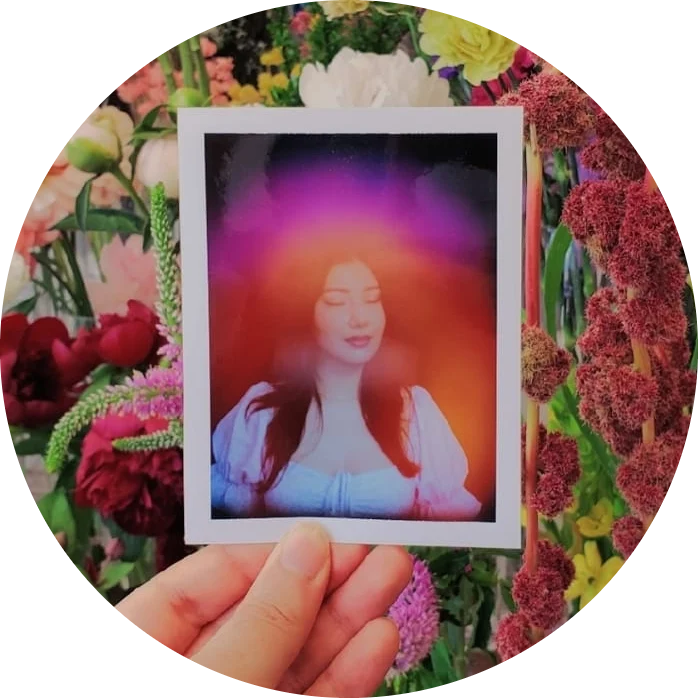
We were leaving the park— the weathered benches and big-kid swings and wide expanses of green-turned-yellow- turned-brown—and the kids were asleep in the back seat and their little lashes fluttered like fallen leaves resting against sun-stained cheeks and our song came on all melancholy and quiet and you smiled at me as we linked fingers over the console and we headed toward the highway signs pointing home, and I thought: let’s paint this bowl, our fruitful life. Let’s hang it on the fridge.
Mia Herman is a Jewish writer and editor living in New York. She holds an MFA in Creative Writing from Hofstra University and her work has appeared in over two dozen publications including Barren Magazine, Bellevue Literary Review, ELJ Editions, F(r)iction, Ghost City Press, [PANK], Stanchion, Third Coast, and Variant Lit. Awards for her writing include an Honorable Mention in the Tom Howard/John H. Reid Fiction & Essay Contest, nomination for the Best of the Net, and finalist for the Frontier Poetry New Voices Fellowship. Follow her on Twitter @MiaMHerman.
ride the train alone / get on the Amtrak / take a coach seat / down the aisle from the skinny bearded guy with the smoked oysters and the tiny silver fork / sit next to the boy who shows you his party videos where he drinks too much Boone’s Farm / knowing any amount of Boone’s Farm is too much Boone’s Farm / talk to the girl in the tie-dye shirt in the observation car while you sip a BuzzBallz margarita / it’s her first time on Amtrak too / no one but strangers / be whoever you want / you are from a small town in Illinois / you are from the big city / you ghost-write country songs for a living / you are an accountant / America is an oil painting slicked and sliding by in a riot of color / you are born of the wild wind / you precious beating thing
Amanda Kooser (she/they) is a writer, rocker, Aikido student, and journalist specializing in space and goofy rocks on Mars. They graduated from the University of New Mexico creative writing MFA program in 2022. Her work has appeared in Yellow Arrow Journal, Conceptions Southwest, The Twin Bill, and The Hallowzine. Amanda lives in Albuquerque where she listens for train whistles and plays a pink-sparkle guitar in indie rock band The Dawn Hotel.
We had been watching the distant hills for three days.
The first day, the smoke started as a thin plume, a persistent pale trickle slipping up into the sky.
“They better get that under control.” On the porch, Dad squinted at the vista below. “Conditions like this. This is no good time for a fire.”
I was suddenly acutely aware of my surroundings: the blonde grasses, blanched and crisp underfoot, the prickle of sweat salting the nape of my neck. The sun baking the earth, parching the pine boughs. The breeze had been nothing but billows of heat, even in the night, when the air up in Gold Creek usually cooled to a chill. It hadn’t rained in weeks.
“Should we call 911?”
“Nah.” Dad sat back and tucked a slug of chaw into his cheek. “I’m sure someone’s already doing something about it. We’re not the only ones who see it.”
I watched the curl of smoke with a morbid curiosity, the way you might gape at an accident—tragic that it was happening to someone else, but close enough to the danger for a little thrill.
“Don’t worry about it, wild man,” Dad said. “It’s a ways off.” He called me that, wild man, even though I was twelve years old and perpetually timid, at least compared to him. Dad was the one who had to charge out into the night to scare the scavenging black bears away from the truck when I forgot a granola bar in the passenger seat. This was a brave skin I could not imagine myself wearing, the adult who stomped out into the darkness, swinging the shotgun around like a baseball bat, shouting at the bears to go on, git. There hadn’t always been so many bears in our little town, I learned. In recent years, they were intruding into the populated areas more often because food in the woods was scarce, while human snacks—I had looked at the ground guiltily—were in ample supply.
While the sun baked the ruddy backs of our necks, Dad went about his business and seemed to forget about the smoke in the distance. He unloaded boxes of motor oil from the back of the truck into the shed, pausing to unzip and piss against the papery trunk of an aspen that grew along the side of our mile-long driveway. I kept shooting nervous glances through the tops of the ponderosas. I had never been close enough to a real fire to see smoke snaking up into the skies, but Dad’s movements were bored, methodical. Maybe it was immature of me to worry. Later that afternoon, as the day slipped into evening, the plume of smoke was bigger, fat and puffy as a cloud. When I brought it to his attention, he paused and looked westward again.
“Hmm,” was all he said. The creases between his brows deepened.
That night, the heat was unbearable. I yanked the windows of our cabin open, but there was no breeze, just a heavy dead swelter that sank to the bottom of the room. I tossed and turned, my lanky legs tangled in fabric, until finally I kicked the quilt and the sheets off into a heap on the floor. The moon was a luminous spotlight. The pine branches cast feathery shadows on the window glass. Everything outside was still, too still, uncomfortably still, the entire night world crouched and breathing like an animal ready to pounce. Sometime after midnight, I tugged the windows closed again. It might have actually been cooler inside, where the hot breath of the world wasn’t panting down my neck. I barely slept.
When yellow sunrise spilled through the windows and I woke, the air smelled smoky, a nostalgic smell that brought me back to campfires, cozy winter mornings. Dad’s face was somber. He refilled the coffeemaker and stared out the window, not speaking, only the sputter and crackle of the hot pad as the coffee trickled into the pot. When he stepped onto the porch with his mug, I followed, too close on his heels. I had the childish instinct to slip my hand into his paw, but I didn’t. Instead, I stood up straighter. I caught myself mirroring him: both of our thumbs thrust through our frayed belt loops. The worn planks were smooth and dusty under my bare feet. Pine needles collected in the gaps.
Dad surveyed the thick column of smoke as he sipped his coffee, sucking leftover droplets from his mustache.
“It’s still there,” I said helpfully.
“Yep. I see that.”
“Looks like it’s getting bigger.”
He said nothing, his eyes fixed on the hills below us. Finally, he sighed, tapped something into his phone, and frowned at the screen. When he pressed play on a news clip, a woman’s voice spoke.
“—on scene, just west of Gold Creek, Colorado, where crews are struggling to contain a growing blaze of almost nine hundred acres.” Nine hundred acres! My heart jumped up into my throat. I had a hard time picturing that much land, but nine hundred of anything was a massive amount.
“Dad!” The smell of the smoke was thicker now. My mouth tasted of campfire.
“It’ll be fine, wild man. They’re on it. News says it’s twelve miles off.”
“Are you sure?”
He put a meaty hand on my shoulder. “Think of the Dickinson’s ranch, you know, with the horses? All the way out there? They’re four miles past the edge of town. So the fire’s eight miles further still. That’s a lot of distance, far as a fire’s concerned. Fire doesn’t move that fast, okay?”
I could picture the ranch and the rutted dirt road to the Dickinson’s. A trickle of a creek glittered in the sun. With manes aflutter, horses romped in a celery-green meadow, the only clearing for miles. I had seen an aerial photograph in school once: we lived in a vast, dark river of trees, the granite foothills furred over and swallowed up by pines. From the sky, Gold Creek was barely visible. Four hundred citizens was all, an old mining-era town in Colorado’s high country, every last thing constructed of weathered gray wood, splintered planks, faded hope, rusted tin. Sometimes tourists pulled through in their shiny vehicles and snapped photos of the general store or the cafe or my schoolhouse, once even of the Russell’s weatherbeaten cabin while Mr. Russell stood right there in the yard hosing down the pansies. I had overheard tourists calling us a ghost town, but that wasn’t true: four hundred of us lived here. Four hundred souls, not ghosts, not yet.
The strange, cloying heat unnerved me. It was hard to think of anything else when the air smelled like danger: acrid, almost sweet. The ponderosas’ butterscotch-scented bark, roasting. The smell drifted to the top of my consciousness, choking out any other thought. Nervously, I did my chores: I split some wood and left the ax plunged into the chopping block in the driveway, even though Dad griped at me to move it aside. I heaved the compost bucket out to the pile. Finally, heat-dizzy and drenched in sweat, I slouched in front of the TV, where I was able to forget for a bit. I don’t know how much time passed. Hours, likely, while Dad tinkered in the shed. Eventually, I got hungry and made my way, bleary-eyed, into the kitchen.
The first thing I noticed was the uncanny light. Too murky for the middle of the afternoon, an uncomfortable yellowish hue like the air was steeped in tea. My vision was still scaling down from the TV’s brightness, and I rubbed my eyes and stepped out onto the porch to be sure. My stomach plummeted. It was wrong, the whole world tense. The sky was a bitter sulfur-yellow. Flakes drifted down, dusting the driveway’s gravel, landing in my hair, mottling the bushes. Snow? I thought stupidly, although of course it wasn’t, not in this heat. I ran a fingertip across the truck’s windshield. Ash.
In the shed, Dad was flat on his back, his head and shoulders buried under the chassis of his vintage MG—his project car. A wrench tick-tick-ticked a bolt into place. Jimmy Buffet crooned from a battered radio on the tool bench.
“I think it’s getting closer.” I thumped on the MG’s metal skeleton.
Dad slid out from under the chassis. “What’s that, wild man?” He wiped his greasy, blackened palms on a rag.
“I said the fire’s getting close. There’s ash everywhere. The sky is all yellow. What do we do?”
He stuffed the grease rag into his back pocket and leaned his head through the door, then frowned at the sky and took a few more steps out into the driveway, squinting, craning his neck. Inside the shed, it smelled like fresh sawdust and motor oil, but my T-shirt reeked of smoke, a crackling and sharp scent. My nostalgia for that smell was displaced by a clench of urgency. I twisted the radio dial until I found the news channel.
“—Explosive growth of what’s being called the High Lonesome Fire, which has rapidly blown up to over eight thousand acres in just a short time. The cause of the blaze is reported to be an unattended campfire, despite county-wide fire restrictions. Immediate evacuations are in place for the following areas: High Ridge, Walkerson Pass, Gold Creek, West Park—”
I dashed out into the driveway, breathless. “I just heard on the radio! They told us to evacuate!”
Dad was peering up at the strange sky. “No need to panic.”
“I heard them say it!” I insisted. “They said evacuate! They said Gold Creek!”
“There’ve been fires up here before. Fire’s natural, alright?”
“But it’s not natural! It was a campfire. They already know.”
“Campfire? It’s ninety-four goddamn degrees out. In the shade.” Dad shook his head, stuffing a nugget of chaw into his lower lip. He pinched the tips off a nearby pine branch, which should have bent and flexed, but instead just snapped clean off, a brittle break. “Who needs a campfire now, of all times? Christ.”
“I know! It’s nuts! It’s way too hot for a campfire!” Finally, he agreed with me on something. My voice sounded manic in my own ears. “They said it’s eight thousand acres already.”
“Eight thousand? That can’t be right. Fires don’t grow that fast. That’s almost, what—ten times larger, in less than a day. You must have heard wrong.”
“They said explosive growth. They said it blew up.” It was true—I was quoting the radio verbatim—but I was beginning to feel silly for my repetition. If there was any time to panic, surely it was now. A gust of wind pushed through the pines, a hot smoky breath, and the neighbor’s wind chimes plinged. Flakes of ash caught in my eyelashes. My cheeks were probably scarlet with heat—I could feel them flushed—and I plucked at my sweaty T-shirt. My throat burned as I swallowed. My mouth tasted urgently of smoke.
“This is our home,” Dad said firmly. “We stay put.” When he looked out at the forest, I knew what he saw: the little twig cross I had tied together for our arthritic pit bull, Mick, when I was five. The rose bushes along the driveway that Mom planted before she decided she had enough of this life. Behind us, the cabin that my dad’s grandfather, my great-grandfather, built with his own two hands, during an era that glittered with promise, when men flooded the high country to sift flashes of hope from the gold-heavy creek. It was the only home I had ever known. And all of it—the forest, the cabin, even the crackled creek bed—was dry as kindling.
Ahead of us now, the heavens were darkening. I could see the unholy shape of the sun, a red hazy blot. I knew I shouldn’t stare directly at it, but I did anyway, and my eyes didn’t burn right out of my skull, like I had been cautioned. The sun’s light was too feeble through the smoke. Above us was an apocalyptic sky from a movie, not a sky I recognized. It was no longer a forest I recognized, either. This menacing new forest crackled with its own hot breath.
Some of the ash flaking down had letters printed on it. Roasted pages of a book, I realized, when I pinched a scrap between my fingers. That meant someone’s house was burning, this very instant. I was coughing now, tears welling in my smoke-burned eyes. I left Dad out there, staring up at the sky in silence, ash collecting in his arm hair as he did nothing, nothing. I grabbed the radio from the shed, ran back out, cranked the volume up.
“Did you hear that?” My voice cracked. “They said there are flames south of County Road 42! That means the Dickinson’s ranch is gone already! We have to do something!”
“Good God,” Dad muttered. “It’s not supposed to happen that fast.” He was frozen in place, gaping at the sky. In the driveway, I left the radio blaring on the hood of the Chevy. I ran inside the cabin and grabbed what I could: our photo albums from the bookshelf. The file folder Dad tucked important papers into, even though I wasn’t sure what exactly it contained. An armload of food swiped from a shelf into a canvas bag. The dented coffee can on top of the fridge where he stashed crumpled wads of cash and spare change. Scanning my bedroom, gulping: my pocket knife, the photo of Mom with the bent edge. It was very dim now, a surreal timeless dark. My throat burned. On my way out, I flicked the porch lights on, but the weak light did little to cut through the haze. Wind whipped through the trees. The forest was full of shooting stars: the ash had turned to embers streaming through the sky.
I tossed our things into the back of the Chevy. Had the sense to yank a tarp over the bed to protect our stuff from embers.
“Dad!” I shouted, even though he was only a few paces away. “I packed up. We have to leave!”
Now I could make out an amber glow through the pines that twisted my gut with an animal panic. I knew, without a doubt, that this was the end of something. The end of everything.
“Come on! Please! We have to go!” My eyes were streaming: smoke, fear. Grit and ash stuck to the wet tracks on my cheeks. I started towards him to grab his hand, but just then, an ember lanced through the air like a comet and seared into his shirt. On his shoulder, a hot firefly glow, a sizzle, a blooming ring of charred black fabric. Finally, he startled to life. He yelped and swatted the cinders from his skin. He looked at me with a terror-stricken face I will never forget.
“Let’s go, let’s go!” he roared. I was flooded with relief, but only for a moment. In his panic, he dashed towards me. But I’d left the chopping block in the way, with the ax sunk deep in the stump. It happened in slow-motion: Dad catching the ax handle with his shin, tumbling over himself, crumpling to the dirt.
I ran to his side. He grimaced, clutching his leg.
“Dad! Are you okay?”
“My leg’s hurt. I think it’s bad. I don’t know if I can—” He tried to stand and collapsed. “It might be broken. Goddammit!”
I tried not to look at the ominous glow pulsing through the trees. The heat rose around us in waves. “We have to go.” I pulled him up. “Now!”
“I know, dammit! Just help me get into the truck!” When he leaned on me, he was heavier than I was prepared for, but we managed to shuffle over to the Chevy. He hoisted himself up into the passenger seat, wincing.
“You’re going to have to get us outta here, wild man. You get to learn how to drive, right now.” He flashed a grin at me, an attempt at playfulness, but his eyes were gleaming, saucer-wide. That split second, when we stared at each other across the bench seat, I knew I wasn’t a kid anymore. I clutched the steering wheel like I was holding Dad’s very life in my grip. I didn’t want that responsibility, but there it was. Dad had left some old sweatshirts on the floor behind the passenger seat, and now I stuffed them under my butt so I could see over the steering wheel.
The salmon glow through the trees had begun to flicker and throb. We were out of time. Still, I was determined to pilot us as far as I could. When I yanked the shifter into reverse, the radio toppled from the Chevy’s hood. I backed right into the chopping stump, and I felt the bumper crumple.
“Forget it,” Dad said. “Keep going. Just go.” He leaned over and flicked on the windshield wipers to clear the scrim of ash. The sky ahead of us was sinister. We tore down the driveway, the shape of the familiar ruts cupping the tires. The truck bucked and swayed in my unskilled hands. Scraggly juniper arms clawed the side of the truck, squealing down our metal flank. I turned the headlights on to pierce the smoke.
“Go faster. You need to go faster.”
I rammed the gas pedal down. Thankfully the truck was an automatic. Just before I reached the mouth of the driveway, I was met with flame. Fire leapt through the scrub oak to my right, scrabbled up the tree trunks. Embers and ash flew towards us like charred butterflies.
“Keep going. Keep going!”
“I know! I am!” I stomped the gas pedal down with the tip of my toe, jarring us over the spot fires blazing in the road. Sparks streamed down upon us. Now the woods on all sides of us were ablaze. The forest floor was singed black, glittering with terrible cinders. Flames lapped greedily through the canopy above. I saw the trunk of a pine tree that crackled and glowed like hell.
At the main gravel road I turned left, instead of right toward Gold Creek. The fire had come from that direction. If it was already here at the mouth of our driveway, then nobody needed to tell me our town was gone. The sky was darker now. Flames raced through the undergrowth. I managed to keep the truck on the road, but I jostled us around wildly. Dad grimaced and clutched his leg with every jolt.
Then finally, ahead of us, the thing I feared most: a wall of leaping flame, two stories tall. The road consumed. The smoke billowing and churning. Tongues of flame that writhed and whipped and spun.
“What do I do?”
“We’re all out of options.” Dad’s voice was desperate. “Just keep going. It’s up to you.”
I swallowed hard. I stomped the gas pedal down. I tried not to squeeze my eyes closed as the Chevy leapt through a tunnel of flame. I wanted to shut it all out—the heat welling up inside the truck, the smell of burning rubber that choked my throat, the terrifying whoosh and crackle outside—but I knew I had to keep my eyes on the road. So as I drove us into the heart of the inferno, I saw it all: the searing flames, the cavern of heat. In the passenger seat, Dad’s eyes were tightly closed. His mouth moved as he mumbled, or prayed. It was unfair, I thought, in a flash of anger. He should have to face this, too.
And then we punched through. On the other side, spot fires crackled in the underbrush, but we were finally ahead of the wall of flame. Veils of smoke drifted apart and dissolved into haze. Ahead, the sky darkened to indigo, the color itself a visceral relief, like deep water. The temperature inside the cab cooled in moments, but I could still only smell smoke. I tried to swallow, but my throat was baked dry. My mouth bloomed with iron, where I had bit my lip.
“Sweet Jesus Christ.” Dad cracked his eyes open. Past the fiery underworld, it was dusk, the final remnants of day sinking into darkness, the moon’s beacon rising. We said nothing. We just sat there as I drove on, trembling, shell-shocked, nerves flayed and buzzing but numb with relief, everything marinated in the stench of smoke and burnt rubber. I would smell it on my hair for days, no matter how much cheap shampoo I scrubbed with at the evacuation center. The phantom smell of smoke would wake me every night for weeks.
Even once we were well past the fire, I kept driving, resolute. I did not look back over my shoulder, but every so often a flash of terrible saffron gleamed at me from the rearview mirror. I tried not to think about the quilt Mom had made me, still crumpled on the floor near my unmade bed. The silky manes of the Dickinson’s horses tossing in the sunlight, when I had still been a child. The forest where I had run barefoot and wild, learned to shoot arrows, carved my initials into an aspen near the driveway with the tip of my pocket knife.
We rumbled through the forest, down the granite cliffs of Deer Canyon, up and over the next hill where the road curved again through a clearing. When I had put some distance between us and the fire front, Dad thumped the dash with his palm. “Pull over for a second. Tarp’s loose in the back.” Sure enough, in my side mirror, the soft flapping of a nylon wing.
I steered the Chevy to a halt.
“Put it in park,” Dad reminded me, although I had already clunked the shifter into P. He kneaded his leg as I hopped down from the driver’s seat. The cool night air hit me in a rush, fresh as running water. I breathed deeply.
I had a view of the foothills behind us. The sky was a deep cobalt, darkening, the mountains a black silhouette. Stars glimmered above like shattered glass. Peach smoke churned above the ridge. The fire had consumed my childhood, just like it had consumed the Douglas firs and the squirrels, the speckled fawns and the bluebells, every other gentle thing I couldn’t let myself dwell on. I could still see throbbing flames, which from a distance, looked like a handful of strewn embers on the hills. The coal-dark heavens glittered above, the scorched earth glittered below.
I re-tied the tarp, this time with a proper bowline instead of a hasty square knot. Back in the truck, Dad looked drowsy enough to fall asleep, and when he leaned his head against the window and fluttered his eyelids shut, I let him. It was miles of dirt road, still, winding and rugged terrain, until we would reach the city. But I could get us there. I knew the way.
Molly Seeling is a writer, photographer, and filmmaker based in rural Colorado. Her work has been published or is forthcoming in Landing Zone Magazine, Spry Literary Journal, and Unfortunately, Literary Magazine.
The day my shoes spoke to me was the day that I put aside my winter coat and brushed the lint from my eyes. My shoes were tired of being trodden on, a sentiment I could relate to. They demanded early retirement and presented their resignation in a formal letter attached to one heel with a wad of chewed-up gum. I had no choice but to acquiesce. I set them free, free to join the other shoes at the bottom of my linen closet where they all chain smoke and complain that their leather is cracking. My leather is cracking too, so I oil my skin with primrose and lavender, ponder my own early retirement, unlike my father, rotted away before his time.
Ly Faulk has loved reading and writing for as long as they could read and write. They still believe in the power of the written word to save lives.
Wake up alone in a bed that isn’t yours with your eyeliner melted down your cheek and one false eyelash fluttering by your left ear.
Smooth the silky covers over your frizzled head. Realise you lost your sequinned dress and found some boxer shorts. Boil with embarrassment. Hope you dressed yourself.
Smell the coffee by the bed, know it’s exactly the way you take it, feel for the fizzy water and paracetamol that will be there, and drink them. Remember the time you put a fingernail through the crimson paper lampshade hanging from the ceiling.
Make it to your feet and aim for the wardrobe that’s new to you, searching for any item of your clothing. Open a drawer full of expensive lace. Under a red satin teddy, see a photo of a delicate-featured woman. Find one of your stockings from last night laddered from heel to toe.
Know you’re supposed to drainthe coffee, be grateful for the paracetamol, and evaporateinto a taxi until your ex-boyfriend wants to ignore his engagement again, kiss you in an anonymous nightclub and dissolve your reclaimed self-respect.
Instead, this time, solidify your resolve. Leave your stocking in the pristine underwear drawer, grab your coat and shoes from the hallway.
Stomp down the road waving to all the neighbours you can spot, and wish, wish wish this time he won’t be able to wash you away.
Anita Goveas is British-Asian, London-based, and fueled by strong coffee and paneer jalfrezi. She was first published in the 2016 London Short Story Prize anthology, most recently by Fractured Lit. She’s on the editorial team at Flashback Fiction, an editor at Mythic Picnic’s Twitter zine, and tweets erratically @coffeeandpaneer. Her debut flash collection, Families and Other Natural Disasters, is available from Reflex Press, and links to her stories are at https://coffeeandpaneer.wordpress.com
I did most of the driving, from New Jersey to Niagara and on to Ontario; Nora in the passenger seat shuffling MapQuest printouts; Amy in the back, kicking her feet, Harrah to her right, rolling her window up and down.
“Stop farting,” Harrah told Amy, who kept farting, probably because she wanted to, not because she had to, probably because she liked making Harrah wrinkle her nose. That’s how Amy was back then, how they both were. They were still getting used to one another. I was trying to keep the car straight on the shiny, wet roads.
Nora kept forgetting to give directions, kept fiddling with the CD player instead. We listened to “Two Step” by Dave Matthews Band probably 36 times. It was playingas we crossed the border. And Canada must have hated it, hated us, I think, because the second my car rolled in, so did this cold front. Frost creeping up the windows, rain turning to sleet, and this wind, loud and strong. I thought, for sure, we’d go over a guard rail.
But there was a pirate ship. I mean, there couldn’t have been, but, yeah, there was. This tourist attraction or something. Nora remembers it, too. A giant pirate ship: four thick masts and a candy-colored hull. Dark but pillowed sails. I figured, well, OK, fuck the wind and the sleet (and the black ice), because if the car flipped over, we’d probably just land, unscathed, on that ship’s bow. So, Nora turned down the music and Harrah rolled up the windows and Amy, well, she kept on kicking, and I sped up and we got through the windstorm.
And then, yeah, we were in Toronto. And we did some stuff. Shivered on top of a space needle and thawed out (kind of) at an aquarium. Went to bars that served us beer, even though we were only 19. But Nora and I had miscalculated, because, sure, we wanted to drink on Spring Break (hence, Canada). We just hadn’t expected Toronto to be so damn cold. Hadn’t expected Amy would keep farting. Hadn’t expected Harrah wouldn’t un-wrinkle her now runny and red nose.
“What did you invite her for?” Harrah kept whispering to Nora, even though she knew that’s how Nora was. (That’s how Nora still is.) Always giving out invitations she assumed people would turn down.
And that’s how the trip was. Icy, I mean, right until that last night when we were too hungover to do anything other than hang out in the chain restaurant next to our hotel. And there were these dudes there, these older men. They were around 30 or 40 or something. And these guys, they kept sending over shots and pointing at their whiskey glasses, like that would make us drink up, like drinking up meant we should talk to them.
Nora and I hid our faces behind some laminated dessert menus, so those creepers couldn’t see us smile, couldn’t see us laugh. Because it was funny, I guess. It was weird, too. It felt weirder later. Like, I don’t know, that pirate ship, so big, so bright, so blunt, a port in the storm. For a while, it was mostly funny, at least until, four whiskeys later, the oldest guy came over, put his hand on the small of Harrah’s back and said, “I sell bonds. Does that mean anything to you?”
And Amy stood up, made like she was going to throw her hands. “You see this fist?” She said to the guy. And Harrah, who liked decorum almost as much as a reason to break it, stood up, too, held out an elbow and threatened to ram its point into the fleshy part of that guy’s temple. Told him if she did, she’d feel so gratified.
And the guy started swearing and his friends were still leering, so Nora stopped laughing, started gathering our coats, and I paid the bill, because it felt like something was about to come due. And I was scared, until we tumbled outside—me grabbing Harrah, Nora grabbing Amy, Harrah and Amy linking arms—because it was cold, so cold that no one followed us, so cold that no one could be bothered to bother us, so cold that we could trick ourselves into feeling safe and warm.
Jeanine Skowronski is a writer based in N.J. Her work has appeared or is forthcoming in Lost Balloon, Janus Literary, X-R-A-Y Lit, Tiny Molecules, Five on the Fifth, (mac)ro(mic), Complete Sentence, Crow & Cross Keys, Fewer Than 500 and more. She placed 2nd in Reflex Fiction’s 2021 Winter Flash Fiction competition.
You move into the neighborhood and now all we hear are clown horns and foot slaps. Go-karts race down Yale Avenue, hit chuckholes and spit you up against concrete curbs. Just when we think we have you all counted, you multiply. Ragamuffins, Dad calls you. We think that’s your last name until our oldest brother, Eddie, yells out—Hey Ragamuffins!—from his GTO, and now you glare at him with cap-gun eyes.
You come over to play with us. We can’t help but stare at the scabs you have for kneecaps, your scarecrow hair. You are our fascination and you know it.
Where’s the creek? you ask, and you lead us there even though this is supposed to be our neighborhood. We are not allowed to go as far as Darby Creek without permission, but you herd us—the seven or nine or more of you—your soiled limbs waving in the August sun.
Darby Creek is a letdown. Can’t even float a stick in it! you scream, and then you are a pack of soldiers—you smear mud on your faces and whoop war cries across the water. Your troop plans its attack on ours. Get the Charlies! You crest the bank and splash through the creek, sticks raised like swords.
We stand frozen on the grass and observe you as if we’re watching the NBC nightly news broadcast from Vietnam. Eddie’s scared of Vietnam. You don’t know about his low lottery number; how Dad looked like a sponge cake when the draft man on TV pulled number 26 from the plastic capsule. You don’t see us sitting around the dinner table every night watching soldiers in the thick jungle, choppers landing on dirt pads. You don’t hear how we can barely breathe as our nightmare unfolds halfway across the world on the tiny screen of our tea cart television. You don’t notice our camouflaged tears. Instead, you point sticks at our heads.
Fight! Coward! You bang your chests as if there are centipedes trapped inside of your ratty tees.
We want to protest, but we know it won’t matter. You crave bloodshed. You skip over lumpy rocks in Darby Creek, bodies of the dead and missing. You approach; we feel the warmth roll down our legs. Your crooked teeth grin wide as you trip us, grind pinkies into our Good-Humor-truck bellies. We watch as our choker beads spill into the clover. We pray for Darby Creek to grow angry, leap the bank, wash you back to where you came from, though we have better things to pray for in 1972, and then the dinner bell rings and you surrender your weapons.
We retreat to the kitchen table. NBC’s cameras fly over mangroves and rice patties; we want to tell Eddie we survived the war of the Ragamuffins, but men are face down in the waterlogged field and somehow that seems more important. Mom spies the creek mud underneath our fingernails, and we are sent to the bathroom sink to scrub and scrub.
Back at the kitchen table, Eddie’s gone and no one’s talking. The newscaster flatly lists Vietnam’s daily count—37 dead, 81 missing—almost as if he’s reporting sports scores. Dad reaches over, switches off the TV. Finish your dinner, Mom commands, and we don’t dare mention the hunk of steak and full mountain of mashed potatoes still on Eddie’s plate. We slide green beans into our mouths, but they are cold, slimy water moccasins.
Outside, wheels rumble and scrape across pavement. We imagine sparks flinging down Yale Avenue, your helmetless heads free and loose, hands and feet stretched outside your go-karts, tongues flapping. We chew cold steak while listening to your wild shouts and laughter, the roar of your escape.
Michele Finn Johnson’s short fiction collection, Development Times Vary, was the winner of the 2021 Moon City Press Short Fiction Award and is forthcoming in 2022. Her work has appeared in A Public Space, Colorado Review, Mid-American Review, DIAGRAM, SmokeLong Quarterly, and elsewhere. Her work was selected for the 2019 Best Small Fictions anthology, won an AWP Intro Journals Award in nonfiction, and has been nominated several times for a Pushcart Prize, Best of the Net, and Best Microfiction. Michele lives in Tucson and serves as contributing editor at Split Lip Magazine.
I schlepped all the way out to Houston to see the Oracle. Not Houston, Texas—Houston, Mississippi. In Chickasaw County. It’s not an easy journey: six hours by road from our farm if you’re lucky, then eight miles through the brush to the Oracle’s godforsaken shack, which reeks of incense and smoked pig. You get one question for her every three decades. I don’t make the rules, that’s just how her powers work. Eileen and I had recently quit our teaching jobs to start the farm we’d dreamt about for years. I was there to ask whether we’d be able to hack it, whether we’d made the best or worst decision of our lives. I needed to know even if knowing wouldn’t change a thing. So I worked up the courage to ask my question, voice breaking like a prepubescent teen.
The Oracle went into that little trance she goes into, followed by the convulsions. At the end she stared at me, her eyes going pure white before settling back to brown. She composed herself, smoothing down her headscarf, and asked quietly if I wanted to know how I’ll die, her voice timid in comparison to her omniscience.
I frowned. “That’s not what I came here for.”
“I understand,” she said. “But that’s what I saw.”
“Okay,” I said, figuring it’d be better to prepare for that long night rather than crash headlong into it. “Tell me.”
“You’ll be killed by roving opossums,” she said, betraying no emotion. Just stating facts.
The words didn’t quite make sense given the context. Opossums? Roving? I asked her to repeat herself, which she did. I’d heard it right.
“What does it mean to be roving?” I asked.
“From what I could tell, the opossums were transient. They didn’t have a home. Maybe that’s why they go after you,” she said. “They’re lost and scared.”
It seemed like such a random way to go. No meaning to it at all. “So, I just want to double check,” I said. “There’s nothing I can do to stop it from happening?”
“No,” she said. “It’s fated.”
“Dang.”
I went home to tell Eileen the bad news.
She was horrified, worried about me, about living in fear of opossums around every corner. I suggested we plant some trees, give them a home.
“Why?” she asked. “It won’t do you any good.”
She wasn’t wrong. My death was preordained and the Oracle never flubbed a prediction.
“It just feels right,” I said. “I can’t explain it.”
Eileen sighed, perhaps more willing to deal with my whims given the revelation. “Okay,” she said, finally. “If it’ll make you feel better.”
Next morning, we brought home some oak seedlings from the farmer’s market. Oaks, I felt, were a particularly beautiful tree when fully grown. They had heavy graceful limbs that draped down shade, turning a hot day into a pleasant one. Any opossums in the area would surely appreciate these oaks—years from now. Maybe I’d even get to see them grown by the time the opossums came for me.
In the weeks that followed, I learned more about my eventual executioners. I came to respect them. Opossums are wily creatures. When they’re down and out, they mimic the look and scent of a dead animal. They wouldn’t be hoodwinked if I tried to play dead.
Over lunch one afternoon I asked Eileen, “Would it be macabre if we started a opossum sanctuary?”
“It would be ironic,” she said. “But I’m game.”
We made our farm as opossum-friendly as possible. Planted more oaks. Removed all the barbed wire fencing from our land. We kept an eye out for stray opossums, injured opossums caught in traps, baby opossums abandoned by their mothers, and took them back to our place. Once the opossums got here, we mostly let them be. But Eileen did have a favorite that she’d named Daisy, a rescue we’d found wandering alone down a highway a few hundred feet away from her mother’s flattened body. Eileen had sat up all night with Daisy—opossums being nocturnal—stroking her fur and feeding her blueberries until it was morning and they were both asleep.
Years later, we sat out on the porch with cold glasses of water and a bowl of fresh-picked blueberries, looking out over the beautiful things we’d grown. Daisy had nestled into Eileen’s lap, having grown accustomed to daily head rubs. The weather was warm and lovely, a gentle breeze going by every so often, and the sun was just beginning to set below the trees, painting the sky an otherworldly pink and lavender. We could hear bugs chirping or humming or whatever it is they do. I put my arm around Eileen and brushed her cheek. It was wet. I think I knew why she was crying. I kissed away the tears as the opossums skittered in the trees, our lives rich with possibility, our fates assured.
Matt Goldberg‘s fiction has appeared in SmokeLong Quarterly, The Normal School, Porter House Review, and Bending Genres, among others. His work has also been anthologized in Coolest American Stories 2022 and won first place for the 2021 Uncharted Magazine Sci-Fi and Fantasy Short Story Award. He earned his MFA from Temple University and lives with his partner in Philadelphia, PA. Find him on Twitter @mattmgoldberg.
The lights are out in the cabin where the boys and I sleep, but I’m not there. I’m awake in the backseat of a truck with a sleeping Mason whose face is smushed against the window.
“No favorites,” my boss commanded us during orientation, but Mason crafts ketchup art on his dinner plate, writes his own murder-mystery book series, and likes Schitt’s Creek as much as I do.
The driver flies down the two-lane road. I swallow a shout whenever a deer appears by the shoulder, not wanting to wake Mason without cause. I tell myself that if we hit a deer, he’ll wake up anyway. I remember the story my dad told me, how he totaled his Jeep before I was born.
“The deer came out of nowhere, and I couldn’t turn fast enough. I tried.”
At the hospital, a man asks the woman behind the desk to let him in the back to see a patient. “It was my fault,” he says. “I need to tell him.” She sends him away. Our turn.
“My stomach hurts,” Mason tells her. He tells her that it hurts less than it did an hour or so before. Our driver, an actual adult with copies of Mason’s insurance and a credit card, explains that the doctor at camp thought it might be appendicitis. I am the twenty-year-old counselor who was told to go with his camper to the hospital. I stand behind them both, useless.
In the waiting area, I’m on my phone. Mason asks if I’m texting my girlfriend. I laugh and don’t answer him, too embarrassed to tell a middle schooler that I’ve never even been on a date. Not counting prom when I took my sister’s friend. Mom was fussing with my tux while Dad instructed me, “Be sure to give her all your attention tonight. It’s her only prom.”
We get called into an exam room. A woman in scrubs sits at a desk littered with empty yogurt containers and blank forms. She asks Mason questions. “It doesn’t really hurt anymore,” Mason says. The driver huffs and rolls his eyes. The nurse says we should still run a test to be safe. Mason pees in a cup. Back to the waiting room.
At the vending machine, Mason makes fun of how many snacks I buy. I get him a Musketeers Bar, one of my dad’s favorites. We avoid the driver, he’s kind of weird. I look up “Would You Rather…” questions on my phone.
“Would you rather be in jail for five years or a coma for a decade?”
“Coma, definitely.”
“But you lose ten years of your life!”
Mason shrugs.
They call us back to a different room. There’s a bed for Mason and one chair. The driver is kind enough to sit on the floor. It’s three in the morning. “We need a blood sample,” the nurse says and Mason starts to shake. He’s never given blood. I put my hand on his shoulder as the needle slips into his skin.
I remember when my dad drove me to the hospital to have blood work done.
“You don’t have to look at the needle. You can if you want, but you don’t have to.” We stopped at Hardee’s for biscuits after.
The nurse pulls the needle out of Mason’s arm. His body calms. More waiting.
A doctor enters. They need a CT scan. If he has appendicitis, he will need surgery. Mason’s never had surgery. He lies back on his hospital bed and starts to shake again.
I pull out my phone and tell him he can watch Netflix. He takes it and sees my lock screen. A man is sitting on a couch wearing an LSU baseball cap, wrapping paper at his side, but the gift is out of frame. The man is grinning.
“Who is that?” Mason asks.
I don’t know how to tell him it’s a picture of my father. My father who I am named after. My father who drove me to swim meets and bought me ice cream whether I won or lost, who taught me to drive, who watched Seinfeld with me, who came to all my school plays and pretended to like even the bad ones, who said “I love you” every morning before school. My forty-six-year-old father who was in good health when he lay down on an operating table and bled out within an hour only a year ago.
I know I can’t tell Mason that. There is no reason to tell Mason that. The doctor will wake us up around six the next morning to say that the CT shows it is indeed appendicitis and that the surgery has to be today, and Mason will go in for the operation and come out just fine.
Mason’s parents will come down for his three-day recovery before he returns to camp. I’ll shake his father’s hand and tell him that his son is my favorite in the cabin. Mason will return to camp and see his friends and go swimming and walk on the beach and play basketball and read with a flashlight and leave camp and go back to school and grow up and go to college and get married and have children and see them grow up and he won’t die before they have a chance to say goodbye.
Mason is not my father. Mason is different because Mason is just like everyone else.
I stare at the screen, unable to return my father’s smile. “It’s my dad,” I say.
Mason nods. He turns on Schitt’s Creek, and without looking at me, tilts the phone so I can watch too.
Ray Lantrip is a student at Covenant College working toward his degree in English. He writes creative nonfiction, poetry, and drama. When he’s not wasting time on his phone, Ray enjoys performing on stage, going for runs, and trying out different energy drinks.
760°C is the optimal level for melting. They may go higher if you are too resistant, though this may make your vessel too pliant after cooling.
Once you are in a liquid state, they pour you into a mould where you coagulate and harden into your vessel.
They spray you with sand-coloured paint and stamp the pink on your cheeks, the red on your lips, the peach on your fingernails. They stitch long black hair to your scalp, curl it, spray it.
They inject you with earthly knowledge of mathematics and biology and celebrities and philosophy and mythology and history and the universe. You learn the rules to follow: Don’t be a slut, but don’t be a prude. Be strong, but not a bitch. Be maternal, but not a nag.
A white lace dress shrouds your face, catches on your breasts, and then flutters around your knees as they drop you down, down, down from the sky.
He texts you back after two minutes, so you follow protocol and wait four.
Record these numbers in your fieldnotes and report back.
Generate a sense of intimacy with your human target by exchanging flirty banter: an inside joke about peaches, an expertly placed winky face emoji sent no more than every five messages, overexaggerated disbelief at the fact that you have the same taste in music.
After a rapport has been obtained, he sends you paragraphs about his childhood and his past girlfriends and his thoughts on the current political climate. You reply thoughtfully—a good method to convince your target that you are kind, which is a very desired trait in women, you’ve learned.
You are already learning so much. Perhaps more than you should be.
His tales of summer camps and boarding schools suggest childhood neglect. Therefore, you must be loving and caring and sweet toward him. He says all his ex-girlfriends are crazy, so don’t be too high maintenance or question his judgement. If he explains something to you that you already know, do not point this out to him. Should he ask you about your opinions, do not say too much. (Incidentally, he doesn’t, you note.)
Before he falls asleep, he texts you, let’s hang at art gallery tom 3pm.
When you arrive at the art gallery, he is not there. If a target is late, you must wait at least thirty minutes before contacting him so that you do not seem needy. This is part of protocol. You are in control.
You do not want to bother him, so you wait an hour before calling.
His voice sputters from the phone, Hello?
You say, I’m sorry—but—where are you?
He says, Oh, shit, uhhh—um, something came up, can we reschedule?
You say, It would have been nice if you could have told me that before I got here.
He says, Something came up, I forgot.
You say, I’m sorry. Of course, I understand.
He says, I’ll text you later. I’d really love to still see you.
Record this in your notes, make a chart.
When you see him two days later, he wears a dress shirt and jeans stained with greyish blue clay. He is older, lanky with flat dark hair, and you are not sure if you find him attractive or if it’s just how they trained you. When he shifts his body close to you, you feel inferior and powerful in your short lace dress.
He calls you beautiful and you watch him watch you as you look down and blush the way they taught you to.
You walk past paintings of voluptuous, soft, naked women that, as you progress through the gallery, shift from primitive spheres to sensual strokes to amorphous lines, bursts of colour.
The two of you walk through the gallery in silence. When a target is not contributing anything to the conversation, the responsibility falls on you to say something to capture his attention and remind him of your charm.
You say, I don’t get contemporary art. I like art like this.
You stare at a painting of a woman arching her white, hairless body toward a cloudless sky, eyes averted, arms passively extended toward the encroaching tendrils of a willow.
You don’t know if you believe it or not, but you think it’s the kind of sentiment he would find endearing.
You must watch yourself as if your target is always watching you. Perceive him perceiving you. Mean what he wants you to mean.
He says, Me too. Modern art is BS. Like, anyone could do that.
He glows when he feels seen by you and you glow in return when you catch him watching you.
On your way out of the gallery, you see a painting of an angry young man standing naked on top of the head of Medusa.
You ask him, What’s your type?
He says, I love strong women.
Before he goes, he hugs you so hard his fingers leave small whirlpools on your arms.
His house is at the bottom of a hill, behind a forest of pines, surrounded by a field of long grass and yellow wildflowers, not far from town. He leads you into his garage: large, with an equally large black car on one side and a studio on the other. There are pottery wheels, sharp wooden tools, a kiln. Clay sculptures—most of them of unknown women—rest on almost every surface..
He says he wants to sculpt you. He takes off your dress and places you on a stool and arranges your legs, arms, hair and begins to knead and chisel away at a small mound of clay.
A consequence of travelling through time and space is that your body may glitch and warp, flickering in and out of view for a brief second or two.
When you disappear from his view, his eyes will search for you.
Even when he cannot see you, remember he is always watching. Sit up straight, bat your eyelashes. Without him, you do not exist.
As the clay grows limbs and breasts and hair, you realize you do not know what you look like.
When he finishes the sculpture, you ask him if he has a mirror. There is a small one lying on a table, and he holds it up to your face. You touch your black eyelashes, your flushed cheeks, your long hair, and the woman in the mirror does the same.
As you gaze upon your reflection for the first time, you say, quietly, that you look strange.
He says, That doesn’t sound like something you would say. You are so confident.
Before you leave his garage, you take a photograph of yourself with your phone.
You study the photo and think your face, your body seem wrong. You want to split yourself open and spill out of yourself.
He catches you looking at the photograph and scoffs, God, you are vain.
You say, It was a bad photo. I don’t like it anyway.
He walks over to you and pulls you close and says, But you are so pretty.
He kisses you, rough, wet. You are supposed to close your eyes, but they stay open, look away, search.
You glitch and flicker.
When you aren’t engaging with your target, you slip into a nothingness suspended between sleeping and wakefulness. You cannot fall asleep. You can only think of him.
You enter his bedroom for the first time. Sunflower wallpaper, sculptures and art supplies scattered on a small desk, mattress on the floor. He turns on his stereo, and it hisses and warps with interference when you pass by.
He entangles a fist in your long hair and yanks it back, yanks it back. He moves in you so roughly you think your vessel might break, collapse in on itself. If you could bruise and bleed, you would. You know when to make noise and how to configure your body and how to make him feel good. If you could feel pleasure, you wouldn’t; this part of yourself is unknowable.
You stare at his wallpaper and count the sunflowers.
He turns to you and says, You’re not like the other girls. You are special. You are kind.
Your chest burns; something inside stirs, grows, no longer fits.
Leave this out of your notes.
You text him and he doesn’t respond for eight hours.
Write this down. Look for correlations, causations. He’s probably in a bad mood because there’s supposed to be scattered showers tomorrow at noon, and he hates the rain because it reminds him of the night his childhood dog ran away.
You are supposed to wait sixteen hours before responding, but you reply in two minutes.
He responds a day later.
Write this down, too. He is probably just busy with work. He doesn’t have a job, but sculpting is certainly work, even if he doesn’t sell anything.
If a target stops responding, it is protocol that you should not be emotional. Attachment is a sign of defectiveness. You should always be in control.
But you want to call him, you want to see him.
You do not know why they want you to feel bad for wanting. You do not know if this is something you are allowed to wonder about.
Don’t write this down. Eventually, he texts you, wyd?
You’ve counted all the sunflowers, so now you count the petals.
His hands knead, scratch, dig at your flesh. He says, I think you’re the one.
He slaps, punches your face. He says, What music should we play at our wedding?
He wraps a belt around your throat and pulls. He says, I think you were made for me.
You’ve counted all the petals, so now you count the seeds.
You aren’t sure if you like it, if you want it, but you never tell him to stop. He never leaves a mark, anyway: you are flexible.
You’ve looked at the sunflowers so much that they no longer look like sunflowers, just a wall of melted yellow.
When you see him next, you ask him why he’s been ignoring you.
He turns away and covers his head with the blanket and groans.
You ask him if you could spend more time together.
He gets up from the bed and says, You’re not the dictator of this relationship.
You say, Okay, I’m sorry.
He says, Not everything is about you. You can really be brainless sometimes.
You say that you know, you know, you’re acting crazy. You’re sorry, you’re sorry.
You put on your dress and head for the door.
He gets up and stands in front of the door and says, I shouldn’t have said that. I’m just sad you’re so mad at me.
He grabs your wrists and looks in your eyes and it feels so good to be seen.
You aren’t sure if you want him because this is how you were trained or because you love him.
You cannot possibly record this in your notes.
Weeks later, as you lay next to him, you ask him if he’s seeing other girls.
He says, Why do you care?
You say, I just want to know.
He scoffs and mumbles, You really are kind of crazy, huh?
You are angry and you are not sure if you’re allowed to be, so you cry.
He tells you to stop being so pathetic. He says that just because a boy acts like a boy doesn’t mean you’re some kind of victim.
You say, I know, I’m sorry, I’m sorry.
When he goes to shower, you pick up his phone. Fingerprint protected. But you would never. You are not like the others: you are not crazy.
He wraps you in his arms, all wet and dewy, and says, I didn’t mean to yell. I just get angry sometimes because I like you so much.
He whispers in your ear, I’ve always wanted four kids. I’d name them…
His breath is deep and even and the ridges of his spine ripple as he curls away from you. On the bedside table, his phone vibrates and lights up, bathing the yellow walls in blue. You slither out of bed and grasp his finger, place it on the backside of the phone.
His camera roll is full of pictures: most of them selfies, some of them with friends, some of them with girls. The girls are stacked on top of each other in little squares like a collection, like the sculptures in his garage.
There is a girl with vanilla blonde hair plastered all over his Instagram. Pictures of them go back 58 weeks: embracing, kissing, wearing matching sweaters.
You want to hit her and make her bleed and put a belt around her throat and pull her hair.
He stirs in his bed and you aren’t sure how it happens, but you blink and then he’s on top of you and he’s ripping the phone from your hands.
The words spew out of him, hot and sticky. He asks you what’s wrong with you and why you can’t just be sweet like a normal girl. He tells you that you’re a bitch, you’re such a crazy bitch.
You say that you’re sorry, you’re sorry.
He tells you to get out of his house and that he wants nothing to do with you and that he never did.
He lets you go, but as you head for the door, he grabs your arm and pins you to the floor and rips the sleeve of your dress.
You want the rage to flow out of you in tears. You cough and sputter and choke, trying to exorcise your anger like a demon.
He twists your hair and jerks your head back, over and over and over. The stitches on your scalp loosen, your neck stretches out.
He stops and flings you away and says, What are you?
He stares at the black coils in his fist, at your plasticine head lolling in front of your breasts.
He covers his eyes and staggers into the wall and calls you a monster, he yells it over and over and over again.
You cradle your head in your hands. You scratch the paint off your face, claw at your eyes.
When he looks up to face you, his body stiffens and his skin turns the colour of oxidized marble. You strike him and strike him and strike him and he crumples to the floor like dust.
You run into the garage and grab the sculpture he made of you from the top shelf and smash it. You topple his shelves and his tables, leaving his collection in shards on the floor. You run out the back door and dawn follows you across the field, painting the long grass with pinks and reds. You sprint through the grass and wildflowers, kicking up pollen and tardy fireflies, and the hem of your dress gathers up mud and twigs as it peels off you like a chrysalis. The pines bend with the wind and clear a path for you into the forest. Orange sunlight seeps through the leaves and into a pond.
You peer down at your reflection and then splash it away with your feet. Your feet sink into mud, and moss and vegetation curl around your toes. The water, thick and warm, envelops you and guides you under.
They beam you up, up, up from the water, arms raised, coated in slime, trembling and then shrieking and then laughing from the crooked mouth of your lolling head.
Boils bubble and blister under your skin. As you whirl past stars and floating rocks, the rest of your vessel ruptures into chunks and then melts into a pool of black liquid, thick like tar. Parts of you bob to the surface and parts of you spiral and sink: a battered arm, a fingernail, a face you would not recognize and no longer feel the need to see.
Sophia Savva is a writer who has lived in Toronto, Tokyo, and Halifax.